The selection of high-performance materials for mechanical transmission is critical in ensuring the longevity and efficiency of industrial machinery. In the realm of specialized clutches and one-way bearings, the integration of a custom motor bearing material allows engineers to tailor the hardness and durability of the components to specific load requirements. By optimizing the material composition, manufacturers can significantly reduce wear and energy loss in high-speed applications.
Globally, the demand for precision-engineered components has surged as automation becomes the backbone of modern manufacturing. The transition toward wedge-type one-way clutches, such as the CK-D and B200 series, highlights a shift toward designs that prioritize radial dimension compatibility with standard bearings. Utilizing a specialized custom motor bearing material ensures that these components can withstand intense nominal torques and overrunning speeds without premature failure.
Understanding the interplay between material hardness, such as the HRC56–60 requirement for installation shafts, and the operational environment is essential for maximizing equipment uptime. Whether applied in packaging machines or corrugated paper production lines, the right choice of custom motor bearing material provides the necessary structural integrity to handle axial and radial loads effectively.
Global Relevance of Custom Motor Bearing Material
In the global industrial landscape, the precision of mechanical components directly correlates with energy efficiency and production throughput. The implementation of a custom motor bearing material is not merely a technical preference but a strategic necessity to meet ISO standards for quality and safety. As industries push for higher speeds and lower friction, the ability to customize material hardness and cylindricity becomes a competitive advantage.
For sectors such as packaging and paper production, the failure of a single one-way clutch can halt entire production lines. By utilizing materials specifically engineered for wedge-type clutches, such as the CK-D metric and B200 inch series, companies can ensure that their equipment maintains a strict h7 tolerance. This level of precision prevents catastrophic failure and reduces the total cost of ownership over the machine's lifecycle.
Defining High-Performance Clutch Materials
When we discuss a custom motor bearing material in the context of wedge-type one-way clutches, we are referring to specialized alloys and heat-treatment processes. Unlike standard bearings, these materials must support the specific interaction between the wedge and the installation shaft. The material must be capable of achieving a hardness of HRC56–60, ensuring that the contact surfaces do not deform under high nominal torque.
These materials are designed to operate without an inner ring, meaning the outer ring and the wedge bear the brunt of the mechanical stress. The connection to the machine wall via a keyway requires a material that offers both high tensile strength and resistance to shear stress. This intersection of properties is what defines a truly customized approach to bearing metallurgy.
Furthermore, the integration of these materials allows for seamless compatibility with standard bearing dimensions. This means that while the internal mechanisms are highly specialized, the overall form factor remains standardized, allowing for easier integration into existing motor housings and reducer units across various global manufacturing hubs.
Core Components of Wedge-Type One-Way Systems
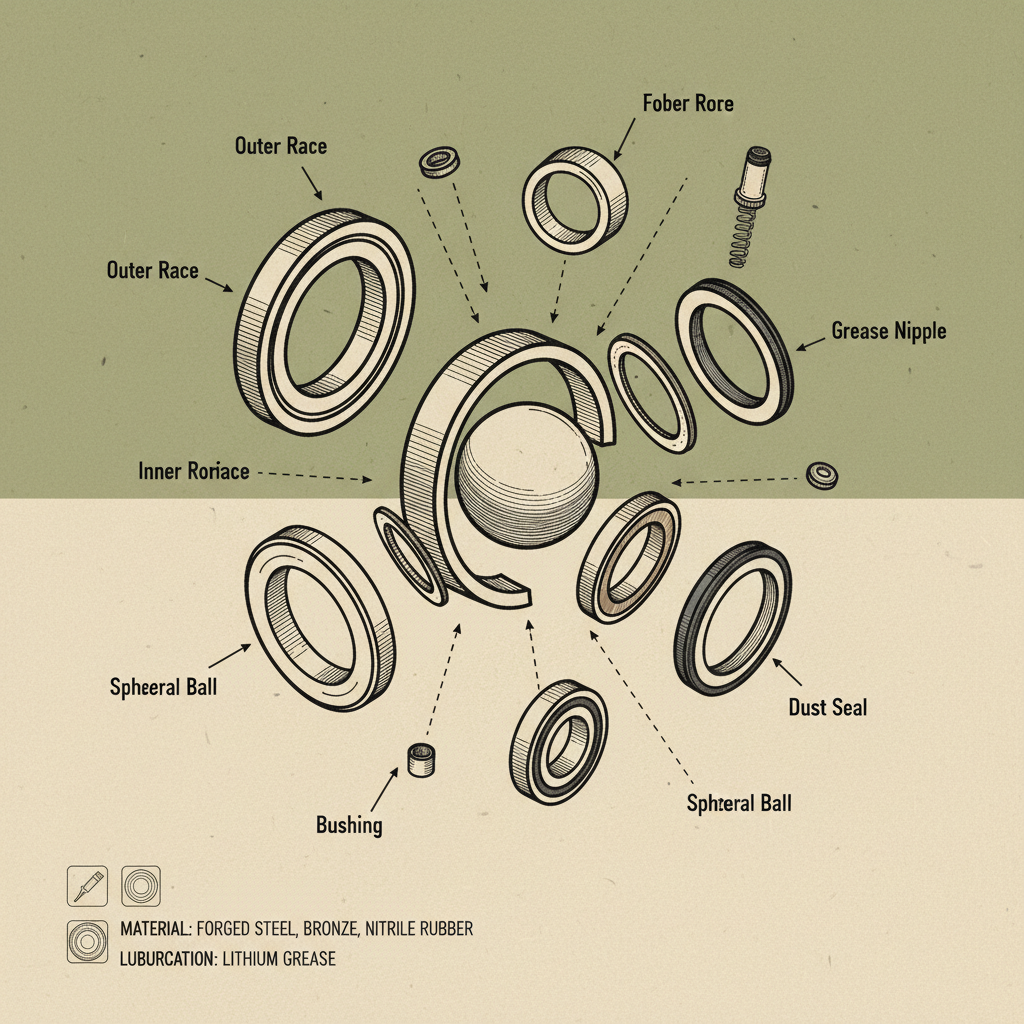
The functionality of a wedge-type one-way clutch depends heavily on the synergy between its components and the chosen custom motor bearing material. The wedge is the primary engagement element, directly matching the installation shaft. Because it lacks a built-in bearing support, the system relies on external bearings to maintain concentricity and handle axial loads.
A critical aspect of the system is the requirement for lubricating grease. The custom motor bearing material used in the CK-D and B200 series is designed to work in tandem with high-grade lubricants to minimize friction during overrunning. Without proper lubrication, the high hardness of the wedge (HRC56–60) could lead to abrasive wear on the shaft.
Precision in manufacturing is the third pillar of these systems. With cylindricity requirements of 0.01mm and strict h7 shaft tolerances, the custom motor bearing material must be stable during the grinding and polishing phases of production. This ensures that the nominal torque, which can reach up to 1188 N.m in larger models like the CK-D70125, is transmitted without slippage.
Performance Metrics for Material Selection
Selecting the appropriate custom motor bearing material requires a deep dive into the operational metrics of the equipment. For instance, the nominal torque and overrunning limiting speed vary significantly between the CK-D1740 (33 N.m, 1680 r/min) and the B214 (1188 N.m, 860 r/min). The material must be balanced to handle these different stress profiles while maintaining dimensional stability.
Engineers often evaluate materials based on their ability to maintain a constant coefficient of friction and their resistance to thermal expansion. In high-speed environments, the heat generated at the wedge-shaft interface can alter the properties of the material, making the use of a stabilized custom motor bearing material essential for maintaining the 0.01mm cylindricity.
Performance Ratings of Custom Motor Bearing Material Options
Industrial Applications and Use Cases
The application of a custom motor bearing material is most evident in machinery that requires precise one-way motion. Packaging machines and bag-making machines utilize these wedge-type clutches to ensure that the feeding mechanism operates in one direction only, preventing material jams and ensuring consistent output. In these environments, the material's resistance to repetitive impact is paramount.
Beyond packaging, these components are integral to corrugated paper production lines and elevators. In these heavy-duty applications, the B200 inch series is often preferred due to its specific torque ratings and dimensional compatibility with North American machinery standards. The reliability of the custom motor bearing material ensures that safety mechanisms, such as those in elevator reducers, engage instantly and reliably.
Long-Term Value of Material Optimization
Investing in high-quality custom motor bearing material yields significant long-term dividends in the form of reduced maintenance cycles. When the wedge and shaft are matched with a hardness of HRC56–60, the rate of surface degradation is dramatically slowed. This extends the mean time between failures (MTBF) and reduces the frequency of costly emergency shutdowns.
From a sustainability perspective, material optimization leads to less waste. Components that last longer require fewer replacements, reducing the carbon footprint associated with the smelting and machining of new steel parts. The precision of the h7 tolerance also means that energy is not wasted through vibration or slippage, contributing to the overall green energy goals of the facility.
Ultimately, the value lies in the trust and safety the material provides. In critical infrastructure like elevators or industrial reducers, the reliability of the one-way engagement is a safety requirement. A custom motor bearing material provides the peace of mind that the mechanical limits of the system will be upheld even under peak nominal torques.
Future Innovations in Bearing Metallurgy
The future of custom motor bearing material is leaning toward the integration of nano-coatings and hybrid ceramics. By applying thin-film coatings to the wedge surfaces, manufacturers can further reduce the friction coefficient, allowing for even higher overrunning limiting speeds without increasing heat generation. This will be particularly beneficial for high-speed packaging lines.
Digital transformation is also playing a role, with the introduction of "smart materials" that can indicate wear through changes in electrical conductivity. This would allow operators to monitor the health of the custom motor bearing material in real-time, moving from scheduled maintenance to predictive maintenance.
As automation continues to evolve, the need for more compact and powerful one-way clutches will grow. The development of ultra-high-strength alloys will allow for the reduction of the outer race dimensions while maintaining the same nominal torque, enabling the design of smaller, more efficient motors and reducers for the next generation of industrial robotics.
Technical Analysis of CK-D and B200 Series Material Specifications
| Series Type |
Material Hardness |
Tolerance Standard |
Application Suitability |
| CK-D Metric |
HRC56–60 |
h7 / 0.01mm |
Packaging Machinery |
| B200 Inch |
HRC56–60 |
Inch Std / 0.01mm |
North American Reducers |
| Low Torque Range |
Balanced Hardness |
Precision Ground |
Small Bag Making Machines |
| High Torque Range |
Max HRC60 |
Rigid h7 Fit |
Industrial Elevators |
| High Speed Range |
Thermal-Stable Alloy |
High Concentricity |
Corrugated Paper Lines |
| Heavy Load Range |
Impact Resistant |
Heavy-Duty Fit |
Cement Mixer Units |
FAQS
The primary benefit is the ability to match the hardness (HRC56–60) and cylindricity (0.01mm) of the material to the specific loads and speeds of the application. This prevents premature wear and ensures that the one-way clutch engages and disengages precisely, which is critical for the stability of packaging and paper production machinery.
The h7 tolerance ensures a precise fit between the wedge and the installation shaft, which is necessary to maintain concentricity. The HRC56–60 hardness prevents the metal from deforming under high nominal torque (up to 1188 N.m), ensuring that the clutch does not slip and the mechanical transmission remains efficient over time.
Yes, these are wedge-type one-way clutches without an inner ring or built-in bearing support. They must be installed with separate bearings to bear axial and radial loads and to ensure the shaft and outer ring remain concentric during operation.
The material's thermal stability and friction coefficient directly influence the limiting speed. A high-quality custom motor bearing material reduces heat generation at high RPMs (e.g., 2040 r/min for B203), preventing thermal expansion that could otherwise compromise the 0.01mm cylindricity and lead to failure.
Yes, lubricating grease is essential. Because the wedge and shaft are both extremely hard (HRC56-60), the grease acts as a critical barrier to prevent abrasive wear and reduce friction, which significantly extends the life of the custom motor bearing material.
Absolutely. The high nominal torque capacity of the larger models in the CK-D and B200 series makes them ideal for elevators and reducers. The material's shear strength and reliability under load ensure that the one-way motion is maintained safely under heavy axial and radial stresses.
Conclusion
The strategic implementation of a custom motor bearing material is the cornerstone of high-efficiency one-way clutch systems. By strictly adhering to hardness standards of HRC56–60 and precision tolerances such as h7, the CK-D and B200 series provide the necessary reliability for demanding applications in packaging, paper production, and heavy machinery. The synergy between specialized metallurgy, precise dimensions, and proper lubrication ensures that nominal torques are transmitted effectively while minimizing wear.
Looking forward, the evolution of bearing materials will continue to drive industrial automation toward greater speeds and lower energy consumption. Companies that prioritize the optimization of their mechanical components will see a marked increase in equipment longevity and a reduction in operational downtime. To explore more about high-precision solutions and specialized bearing materials, visit our website: www.btzbearing.com.