To be honest, things have been… hectic. Everyone’s talking about miniaturization these days, right? Everything’s gotta be smaller, lighter, more efficient. But you get out on site, and you realize that “efficient” doesn’t mean much if it breaks after a week. I’ve seen too many fancy designs that look great on paper but crumble the second you actually use them. The demand for custom heavy duty spherical bearing is really picking up too, surprisingly. Seems like folks are finally realizing you can’t cut corners when it comes to critical components.
I've been doing this for, well, long enough, and I’ve noticed a real trend toward needing things built to spec. Off-the-shelf just doesn't cut it anymore, especially in specialized applications. It’s not just about size or weight either. It’s about the environment it's going into, the loads it’s going to bear, the lifespan you need… It’s a whole different ball game, and custom heavy duty spherical bearing is at the center of that.
And it's not like it's a simple swap either. It's about the whole system, you know? You change one thing, and suddenly everything else has to adjust. Anyway, I think that’s where a good understanding of materials comes in.
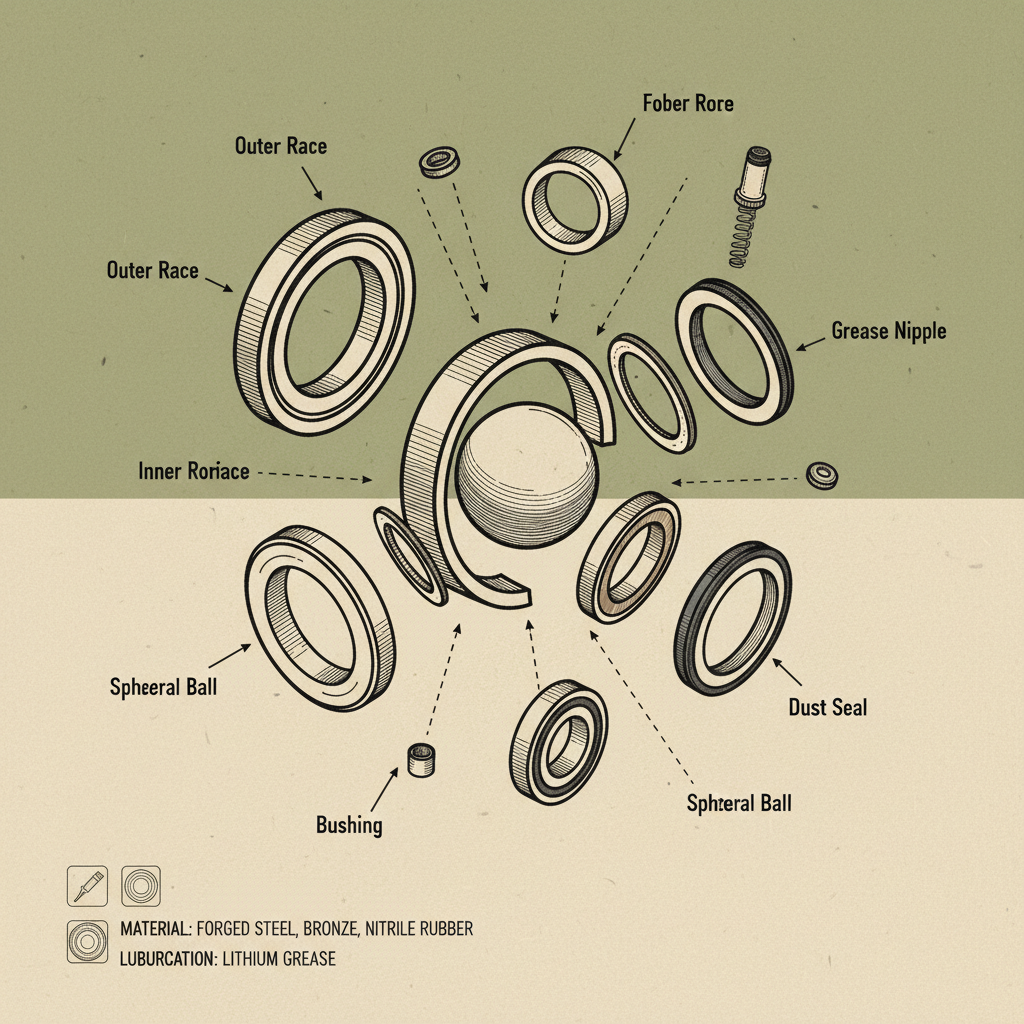

I've been seeing a lot more demand for higher load capacities. Strangely, it’s not always about bigger equipment. Sometimes it's about making existing equipment more reliable. Folks are tired of downtime. They want something that'll just… work. And that means custom heavy duty spherical bearing, designed specifically for the job.
The biggest shift I’m noticing is the move towards more specialized materials. We’re past the point where one size fits all. Now it's all about finding the perfect alloy for the application, considering everything from corrosion resistance to temperature fluctuations.
Lead times can vary drastically, honestly, depending on the complexity of the design and material availability. But generally, you're looking at a minimum of 6-8 weeks. That doesn’t include design time, mind you. If you need something rushed, you're looking at a serious premium. It all comes down to securing the materials and getting the machine time, you see?
That’s a tricky one. It’s not just about the weight you’re supporting. You need to consider dynamic loads, shock loads, and vibration. We usually recommend a safety factor of at least 2, sometimes more, depending on the criticality of the application. The best way is to give us as much detail as possible about the operating conditions.
Plenty. We can do everything from simple zinc plating to more sophisticated coatings like PTFE or ceramic coatings. The best choice depends on the specific corrosive environment. Saltwater, chemicals, extreme temperatures… they all require different solutions. I've seen coatings fail spectacularly when the wrong one is chosen.
Absolutely. We strongly recommend it. Prototyping allows us to identify any potential issues early on and make adjustments before you're stuck with a whole batch of flawed parts. It adds to the cost, of course, but it’s much cheaper than scrapping an entire production run. Trust me, I've been there.
Material, quantity, complexity of the design, and lead time. The more exotic the material, the more expensive it is. The more intricate the design, the more machine time it requires. And if you need it yesterday, you'll pay a premium. Simple as that. Don’t forget about tooling costs either; those can add up quickly.
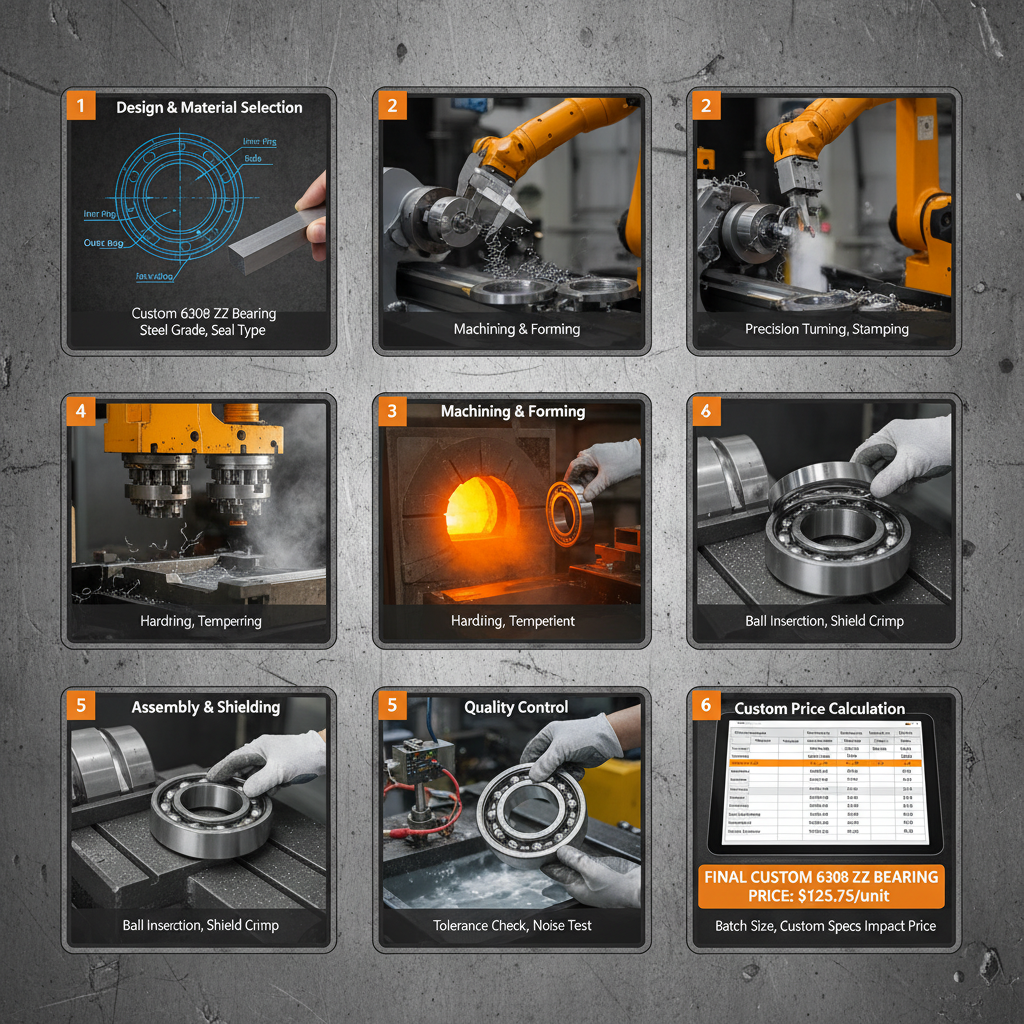
We use a multi-stage inspection process, starting with raw material inspection and continuing through every step of the manufacturing process. We employ both manual inspection and automated testing equipment. And every bearing is subject to a final inspection before it leaves our facility. It's not foolproof, but it minimizes the risk of defects.
So, where does all this leave us? Custom heavy duty spherical bearing isn’t just about fancy materials and complex designs. It's about understanding the application, knowing the limitations of each material, and paying attention to the details. It’s about solving real-world problems with practical solutions, and it’s about building something that lasts.
Look, the industry is changing fast. New materials are emerging, new technologies are being developed. But the fundamental principles remain the same. We need to build things that are reliable, durable, and safe. And for a lot of applications, that means a properly designed, precisely manufactured custom heavy duty spherical bearing.

 Afrikaans
 Albanian
 Amharic
 Arabic
 Armenian
 Azerbaijani
 Basque
 Belarusian
 Bengali
 Bosnian
 Bulgarian
 Catalan
 Cebuano
 Corsican
 Croatian
 Czech
Czech
 Danish
 Dutch
Dutch
 Esperanto
 Estonian
 Finnish
 French
 Frisian
 Galician
 Georgian
 German
 Greek
Greek
 Gujarati
 Haitian Creole
 Hausa
Hausa
 Hawaiian
 Hebrew
 Hindi
Hindi
 Miao
Miao
 Hungarian
 Icelandic
 Igbo
Igbo
 Indonesian
 Irish
Irish
 Italian
 Japanese
 Javanese
 Kannada
 Kazakh
 Khmer
Khmer
 Rwandese
 Korean
 Kurdish
 Kyrgyz
 Lao
Lao
 Latin
Latin
 Latvian
 Lithuanian
 Luxembourgish
 Macedonian
 Malgashi
 Malay
Malay
 Malayalam
 Maltese
 Maori
Maori
 Marathi
 Mongolian
 Myanmar
 Nepali
 Norwegian
 Norwegian
 Occitan
 Pashto
 Persian
 Polish
 Portuguese
 Punjabi
 Romanian
 Russian
 Samoan
 Scottish Gaelic
 Serbian
 Sesotho
 Shona
Shona
 Sindhi
 Sinhala
 Slovak
 Slovenian
 Somali
 Spanish
 Sundanese
 Swahili
 Swedish
 Tagalog
 Tajik
Tajik
 Tamil
Tamil
 Tatar
Tatar
 Telugu
 Thai
Thai
 Turkish
 Turkmen
 Ukrainian
 Urdu
Urdu
 Uighur
 Uzbek
Uzbek
 Vietnamese
 Welsh
Welsh
 Bantu
Bantu
 Yiddish
 Yoruba
 Zulu
Zulu
 English


