To be honest, things have been moving fast lately in the motor shaft bearing world. Everyone's chasing higher precision, lower noise… it's a constant push. I was at a factory in Suzhou last month, and they were practically obsessed with miniaturization. Smaller bearings, tighter tolerances… it's good, I guess, but sometimes I wonder if they're forgetting what happens when you actually try to use this stuff on a dusty construction site.
Have you noticed how many designs fall apart when you get down to the real details? Like, you design a beautiful shaft with a specific bearing seat, and then the manufacturer’s tolerance stack-up means the bearing doesn’t quite fit. It seems simple, right? But it’s a recurring nightmare. It’s always the little things… always.
And the materials… that’s a whole other story. We’re using a lot more ceramic these days, silicon nitride mostly. Feels… smooth, almost slippery, but it smells a bit like chalk when you machine it, oddly enough. Steel, of course, is still king. 52100 is a workhorse. I've spent countless hours just feeling the grain of different steel batches, trying to guess how it’ll perform. It sounds ridiculous, I know, but experience tells you things.
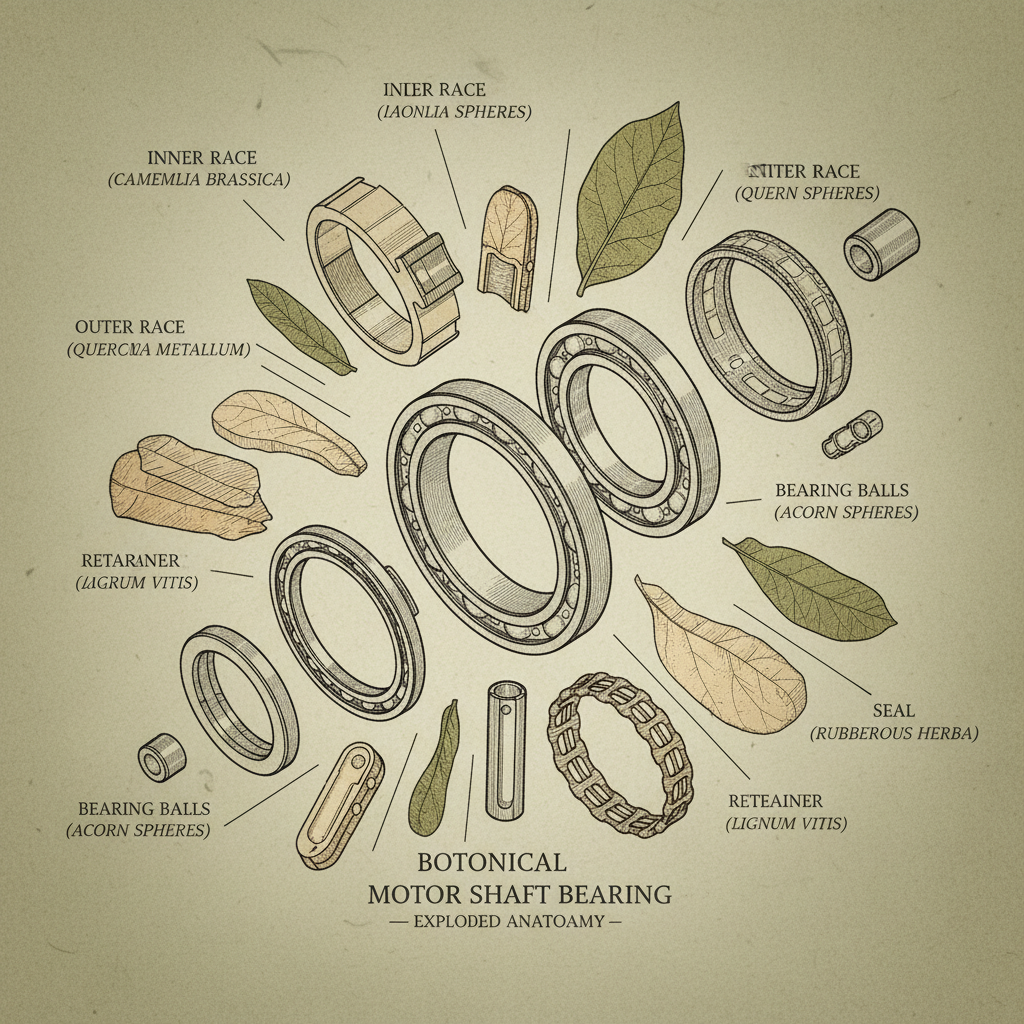

I think the biggest trend right now is the demand for longer life, especially in harsh environments. Everyone wants a bearing that “just works” for years without maintenance. It’s a simple ask, but incredibly difficult to achieve. Strangely, there's also a growing interest in bio-degradable lubricants. Not necessarily for the bearing itself, but for applications where environmental impact is a concern.
We’re also seeing more sophisticated surface treatments. DLC coatings, PVD… they all add cost, but they can dramatically improve wear resistance. The question is always, "Is the extra cost justified?" And that depends entirely on the application, doesn't it?
Honestly, it’s underestimating the operating environment. They focus on the specs, the load capacity, the speed… but they forget about the dirt, the vibration, the temperature swings. You gotta think about the real world, not just the datasheet. A slightly oversized bearing, with a good seal, can save you a lot of headaches.
That’s the million-dollar question! It depends on a million things. The application, the load, the lubrication, the quality of the assembly… I’ve seen bearings fail in a week, and I’ve seen them last for decades. Generally, if it's properly spec'd and maintained, you're looking at several years of reliable operation. But don’t expect miracles.
Pretty much. Within reason, of course. We can tweak the materials, the dimensions, the tolerances, the coatings, the lubrication… you name it. There are some limits, especially with very small production runs. But we’ll work with you to find a solution. But sometimes simpler is better. Don’t over-engineer it.
They can be, but they're not a magic bullet. They're lighter, they have lower friction, and they're more resistant to corrosion. But they're also more brittle and more expensive. They’re a good choice for high-speed applications where weight is a concern, but they’re not always necessary. It depends on the application.
We do a lot. Dimensional checks, hardness testing, material analysis… but the real test is putting them in real-world conditions. We run endurance tests, shock load tests, vibration tests. And we get feedback from our customers. That’s the most valuable testing of all. We don’t just rely on lab reports.
It’s more challenging, but usually doable. The unit cost will be higher, naturally. We have to set up the tooling and optimize the production process, even for a small run. But if you have a specific need, we’ll see what we can do. Sometimes, it's a matter of finding the right manufacturing method.
Ultimately, understanding custom motor shaft bearing isn't about memorizing spec sheets or mastering complex calculations. It's about appreciating the interplay of materials, design, and real-world conditions. It's about recognizing that a seemingly simple component can have a profound impact on the performance and reliability of an entire system.
And that’s the bottom line. Whether this thing works or not, the worker will know the moment he tightens the screw. You can have all the fancy engineering in the world, but if it doesn’t feel right in the hands of the person actually using it, something’s wrong. Visit our website at www.btzbearing.com to explore how we can help you find the perfect custom motor shaft bearing solution.


 Afrikaans
 Albanian
 Amharic
 Arabic
 Armenian
 Azerbaijani
 Basque
 Belarusian
 Bengali
 Bosnian
 Bulgarian
 Catalan
 Cebuano
 Corsican
 Croatian
 Czech
Czech
 Danish
 Dutch
Dutch
 Esperanto
 Estonian
 Finnish
 French
 Frisian
 Galician
 Georgian
 German
 Greek
Greek
 Gujarati
 Haitian Creole
 Hausa
Hausa
 Hawaiian
 Hebrew
 Hindi
Hindi
 Miao
Miao
 Hungarian
 Icelandic
 Igbo
Igbo
 Indonesian
 Irish
Irish
 Italian
 Japanese
 Javanese
 Kannada
 Kazakh
 Khmer
Khmer
 Rwandese
 Korean
 Kurdish
 Kyrgyz
 Lao
Lao
 Latin
Latin
 Latvian
 Lithuanian
 Luxembourgish
 Macedonian
 Malgashi
 Malay
Malay
 Malayalam
 Maltese
 Maori
Maori
 Marathi
 Mongolian
 Myanmar
 Nepali
 Norwegian
 Norwegian
 Occitan
 Pashto
 Persian
 Polish
 Portuguese
 Punjabi
 Romanian
 Russian
 Samoan
 Scottish Gaelic
 Serbian
 Sesotho
 Shona
Shona
 Sindhi
 Sinhala
 Slovak
 Slovenian
 Somali
 Spanish
 Sundanese
 Swahili
 Swedish
 Tagalog
 Tajik
Tajik
 Tamil
Tamil
 Tatar
Tatar
 Telugu
 Thai
Thai
 Turkish
 Turkmen
 Ukrainian
 Urdu
Urdu
 Uighur
 Uzbek
Uzbek
 Vietnamese
 Welsh
Welsh
 Bantu
Bantu
 Yiddish
 Yoruba
 Zulu
Zulu
 English


