Custom spherical roller bearings are critical components in numerous industrial applications, and a comprehensive custom spherical roller bearing catalogue is essential for engineers and procurement professionals. These bearings are renowned for their ability to accommodate misalignment, making them ideal for applications where shaft deflection or mounting errors are likely. The global demand for these bearings is driven by the growth of industries like mining, construction, and heavy machinery, all of which rely on durable and reliable rotating equipment. Understanding the intricacies within a detailed catalogue empowers informed decision-making, optimizing performance and minimizing downtime.
The importance of a robust custom spherical roller bearing catalogue extends beyond simply listing available products. It’s a vital resource for selecting the optimal bearing for a specific application, considering factors like load capacity, operating speed, and environmental conditions. According to ISO standards, precision in bearing selection is paramount for ensuring safety and longevity. Challenges arise from increasingly demanding operational environments and the need for customized solutions tailored to specific machine designs. A well-structured catalogue addresses these challenges by providing detailed specifications, load ratings, and application guidelines.
Consequently, a high-quality custom spherical roller bearing catalogue is more than just a product list; it's a gateway to improved operational efficiency, reduced maintenance costs, and enhanced equipment reliability. It fosters trust between suppliers and end-users and ultimately contributes to the smooth functioning of critical industrial processes worldwide.
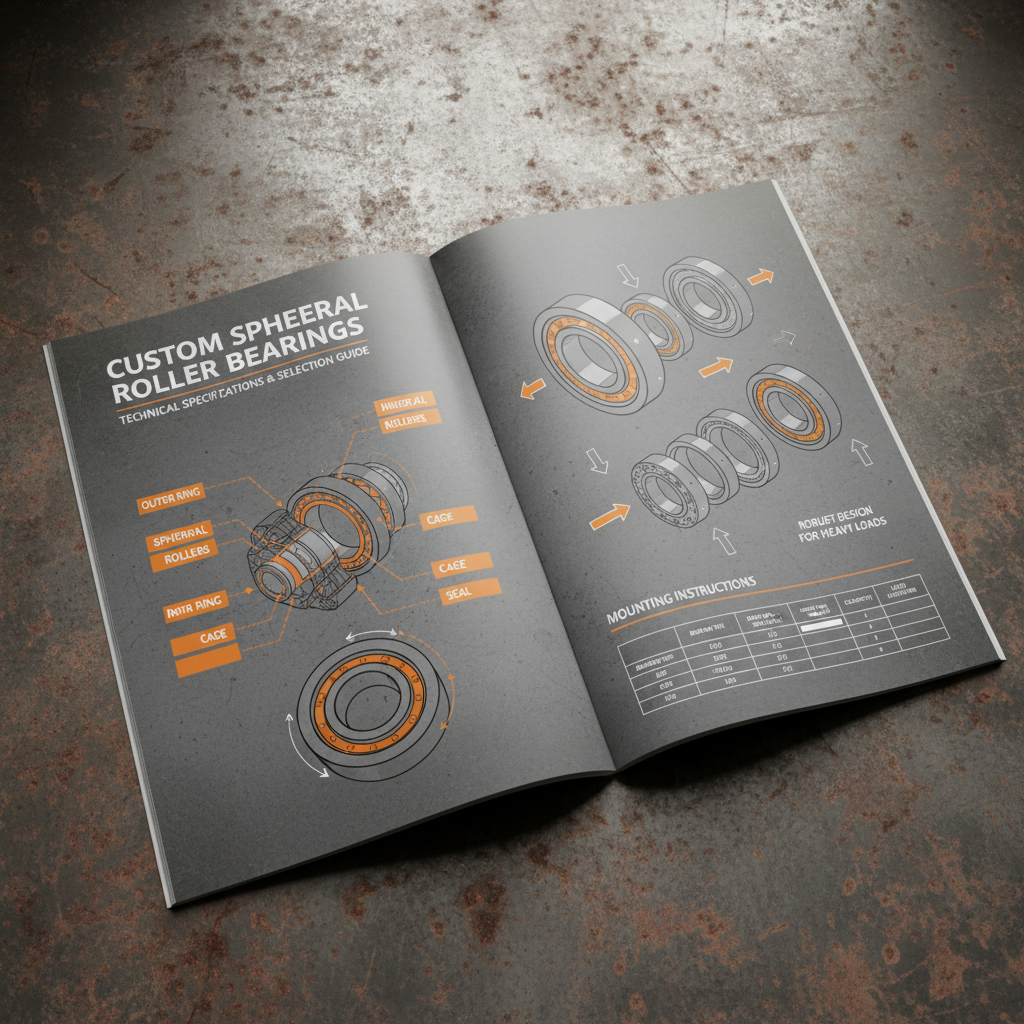
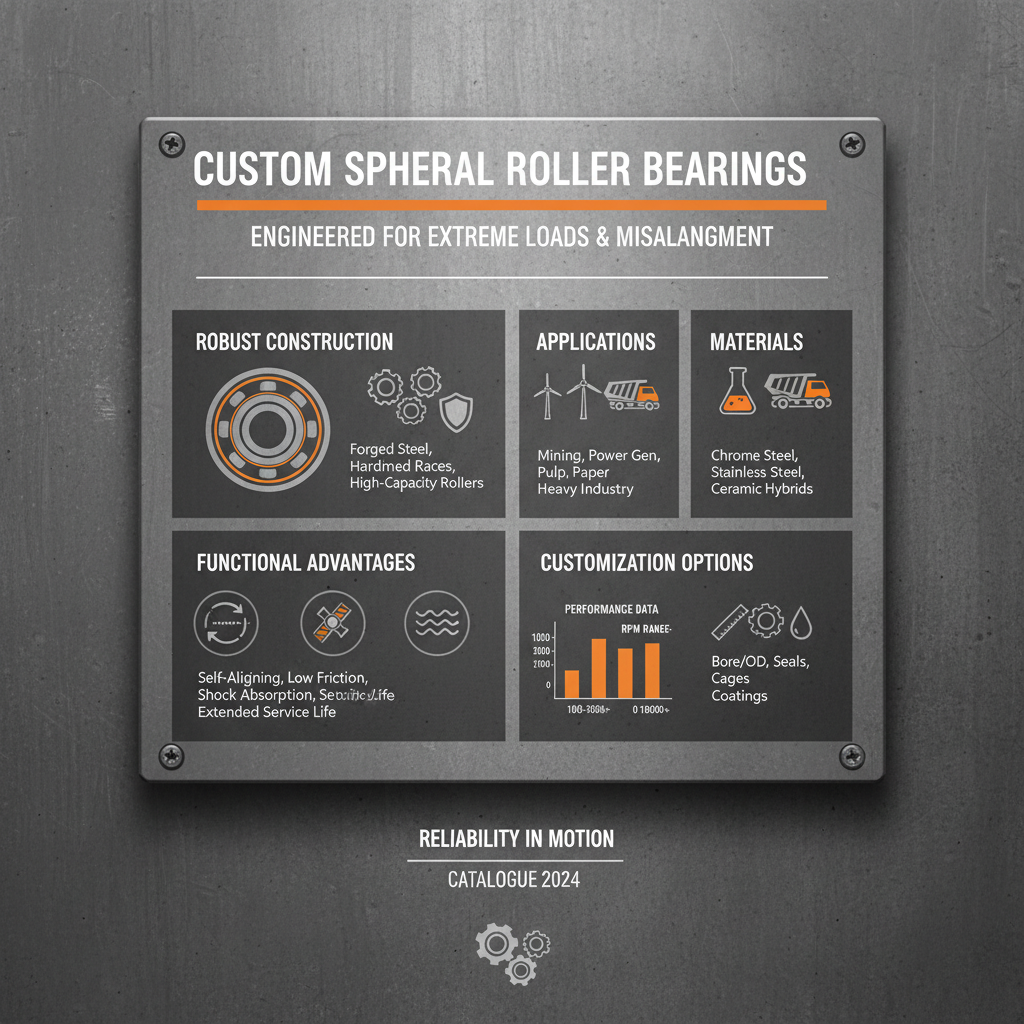
A custom spherical roller bearing catalogue serves as the primary reference point for specifying and procuring these critical machine elements. It consolidates crucial technical data, dimensions, load capacities, and material specifications into a single, accessible resource. The catalogue’s primary function is to facilitate the selection of the most appropriate bearing for a given application, optimizing performance and extending equipment lifespan.
Effectively, the catalogue bridges the gap between bearing manufacturers and end-users, allowing engineers to navigate the complexities of spherical roller bearing technology with confidence. A well-designed catalogue will also incorporate detailed application notes, installation guidelines, and maintenance recommendations to further support users in achieving optimal results.
Most reputable custom spherical roller bearing catalogue providers offer a significant degree of customization, including variations in dimensions, materials, sealing arrangements, and lubrication options. This often involves collaborating with engineers to develop bearings tailored to specific application requirements. The extent of customization available depends on the manufacturer’s capabilities and production facilities, but a good catalogue will clearly outline these options.
Understanding load ratings is crucial for proper bearing selection. The catalogue will list both static (C0) and dynamic (C) load capacities. Dynamic load capacity represents the load a bearing can withstand for a specified lifespan at a given speed. Static load capacity indicates the maximum load the bearing can support without permanent deformation. Always consider the application's specific load conditions and operating speed when interpreting these ratings.
The precision class, often denoted by a code (e.g., ABEC), indicates the manufacturing tolerances and resulting running accuracy of the bearing. Higher precision classes generally result in smoother operation, reduced noise, and increased bearing life. However, higher precision also comes at a higher cost. Choose a precision class appropriate for the application's requirements, balancing performance and cost.
A comprehensive custom spherical roller bearing catalogue will outline various sealing options, including contact seals, labyrinth seals, and non-contact seals. Contact seals offer excellent protection against contaminants but can increase friction. Labyrinth seals provide good protection with minimal friction. Non-contact seals offer the lowest friction but provide less protection. The best sealing option depends on the application's operating environment and contamination risks.
The custom spherical roller bearing catalogue should provide guidance on lubrication requirements, including recommended lubricant types (grease, oil), viscosity grades, and re-lubrication intervals. Factors to consider include operating speed, temperature, and load conditions. Proper lubrication is critical for minimizing friction, reducing wear, and extending bearing life.
A good catalogue will often include detailed instructions on proper bearing mounting and dismounting techniques. This information is vital for preventing damage to the bearing during installation and removal. Incorrect mounting can lead to premature failure and reduced bearing life. Tools and techniques like bearing heaters or hydraulic presses are often recommended for ease of installation.
In conclusion, a custom spherical roller bearing catalogue is far more than a simple product listing; it’s a vital engineering resource that empowers informed decision-making, optimizes performance, and reduces operational costs. Understanding the key components, KPIs, and future trends outlined within a quality catalogue is critical for engineers and procurement professionals alike. Properly leveraging this resource translates to improved equipment reliability, increased productivity, and a strengthened competitive advantage.
Looking ahead, the continued innovation in materials, design, and sensor integration promises to further enhance the capabilities of spherical roller bearings. Regularly consulting updated custom spherical roller bearing catalogues will be essential for staying abreast of these advancements and incorporating them into your designs. Visit our website at www.btzbearing.com to explore our comprehensive range of custom spherical roller bearing solutions.


 Afrikaans
 Albanian
 Amharic
 Arabic
 Armenian
 Azerbaijani
 Basque
 Belarusian
 Bengali
 Bosnian
 Bulgarian
 Catalan
 Cebuano
 Corsican
 Croatian
 Czech
Czech
 Danish
 Dutch
Dutch
 Esperanto
 Estonian
 Finnish
 French
 Frisian
 Galician
 Georgian
 German
 Greek
Greek
 Gujarati
 Haitian Creole
 Hausa
Hausa
 Hawaiian
 Hebrew
 Hindi
Hindi
 Miao
Miao
 Hungarian
 Icelandic
 Igbo
Igbo
 Indonesian
 Irish
Irish
 Italian
 Japanese
 Javanese
 Kannada
 Kazakh
 Khmer
Khmer
 Rwandese
 Korean
 Kurdish
 Kyrgyz
 Lao
Lao
 Latin
Latin
 Latvian
 Lithuanian
 Luxembourgish
 Macedonian
 Malgashi
 Malay
Malay
 Malayalam
 Maltese
 Maori
Maori
 Marathi
 Mongolian
 Myanmar
 Nepali
 Norwegian
 Norwegian
 Occitan
 Pashto
 Persian
 Polish
 Portuguese
 Punjabi
 Romanian
 Russian
 Samoan
 Scottish Gaelic
 Serbian
 Sesotho
 Shona
Shona
 Sindhi
 Sinhala
 Slovak
 Slovenian
 Somali
 Spanish
 Sundanese
 Swahili
 Swedish
 Tagalog
 Tajik
Tajik
 Tamil
Tamil
 Tatar
Tatar
 Telugu
 Thai
Thai
 Turkish
 Turkmen
 Ukrainian
 Urdu
Urdu
 Uighur
 Uzbek
Uzbek
 Vietnamese
 Welsh
Welsh
 Bantu
Bantu
 Yiddish
 Yoruba
 Zulu
Zulu
 English


