


Mar . 19, 2026 02:05 Back to list
Comprehensive Guide to Wholesale Special Ball Bearings for Diverse Industries
Wholesale Special Ball Bearings: A Comprehensive Guide
Sourcing high-quality wholesale special ball bearings is crucial for numerous industries, from automotive and aerospace to robotics and manufacturing. These bearings are engineered for demanding applications requiring precision, durability, and performance beyond standard options. This article provides an in-depth look at the world of wholesale special ball bearings, covering types, materials, applications, and key considerations for sourcing. We’ll explore how choosing the right bearings can optimize your equipment and reduce downtime.
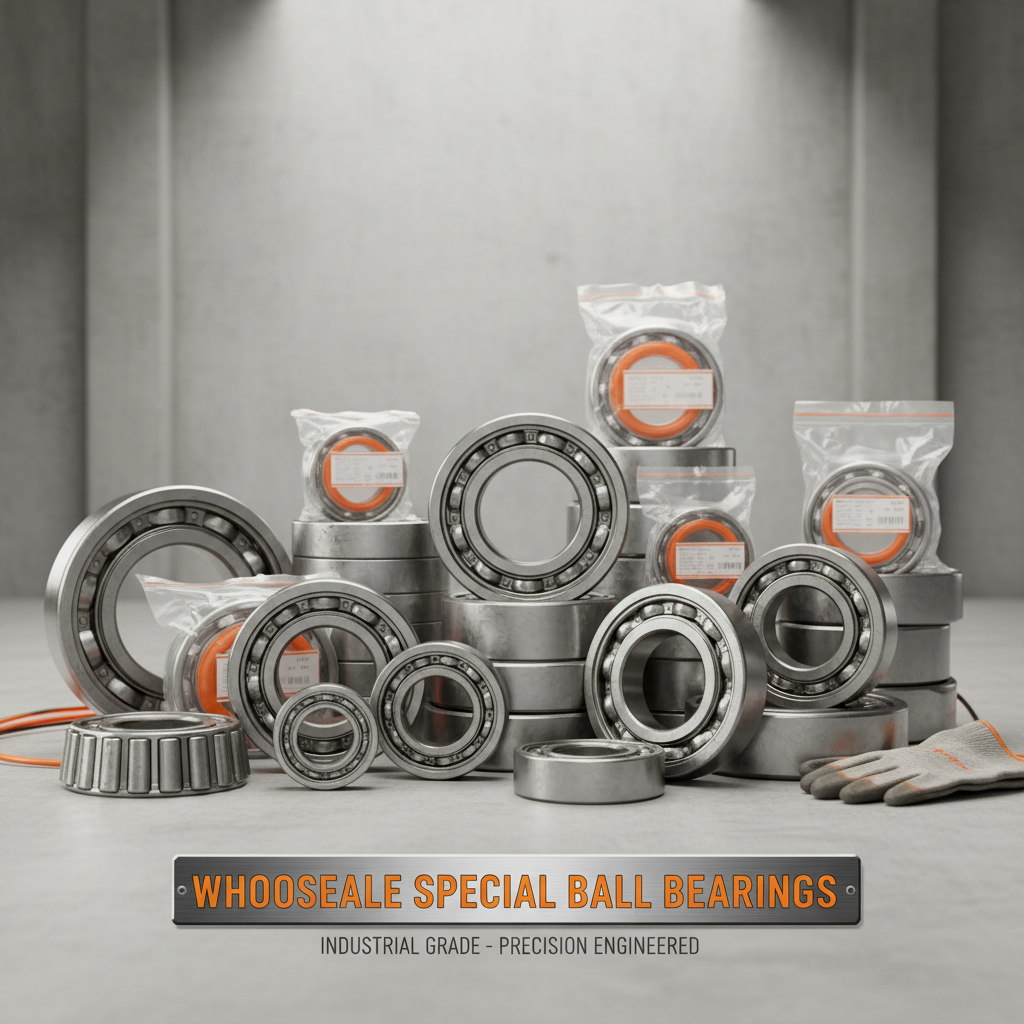
Understanding Special Ball Bearings
Unlike standard ball bearings designed for general applications, special ball bearings are customized to meet specific operational demands. This customization can involve materials, tolerances, internal clearances, lubrication, and cage designs. Factors such as load, speed, temperature, and environmental conditions heavily influence the selection process. Common modifications include high-precision manufacturing, specialized coatings for corrosion resistance, and the use of exotic materials like ceramic or stainless steel. Choosing the right bearing is vital for maximizing efficiency and reliability in critical applications.
Key Takeaway: Special ball bearings are engineered solutions for unique operational requirements, offering superior performance compared to standard bearings.
Types of Wholesale Special Ball Bearings
The range of special ball bearings available is extensive. Here are some common types frequently sourced wholesale:
- Deep Groove Ball Bearings: Versatile and widely used, often customized for higher speeds and precision.
- Angular Contact Ball Bearings: Designed to handle combined radial and axial loads, ideal for high-speed applications.
- Self-Aligning Ball Bearings: Accommodate misalignment between the shaft and housing, reducing stress on the bearing.
- Thrust Ball Bearings: Primarily used for axial loads, commonly found in gearboxes and turntables.
- Ceramic Ball Bearings: Offer exceptional hardness, corrosion resistance, and high-speed capabilities.
The optimal choice depends on the specific application and its demands. BTZ Bearing provides a wide range of these specialized bearing types.
Materials and Their Impact on Performance
The material composition of a ball bearing significantly impacts its performance characteristics. Common materials include:
- Chrome Steel (SAE 52100): The most common material, offering a good balance of hardness, wear resistance, and cost.
- Stainless Steel (440C, 316): Provides excellent corrosion resistance, making it suitable for harsh environments.
- Ceramic (Silicon Nitride, Zirconia): Offers exceptional hardness, high-speed capabilities, and resistance to corrosion and high temperatures.
- Hybrid Bearings: Combine ceramic balls with steel races, leveraging the benefits of both materials.
Selecting the appropriate material is crucial for ensuring the bearing can withstand the operating conditions and maintain its performance over time.
Material Comparison:
• Chrome Steel: Cost-effective, good all-around performance.
• Stainless Steel: Corrosion-resistant, suitable for wet environments.
• Ceramic: High-speed, high-temperature, corrosion-resistant, but more expensive.
Applications of Wholesale Special Ball Bearings
Special ball bearings are essential in a wide array of industries:
- Aerospace: Precision bearings for aircraft engines, control systems, and landing gear.
- Automotive: High-performance bearings for transmissions, wheels, and steering systems.
- Medical: Sterilizable bearings for surgical equipment and medical devices.
- Robotics: High-precision bearings for robotic joints and actuators.
- Industrial Machinery: Bearings for pumps, compressors, gearboxes, and other critical equipment.
The specific requirements of each application dictate the type of bearing, material, and customization needed. Sourcing from a reputable wholesale ball bearing supplier like BTZ Bearing ensures you receive bearings that meet your exact specifications.
Conclusion: Sourcing Quality Wholesale Special Ball Bearings
Choosing the right wholesale special ball bearings is a critical decision that impacts the performance and longevity of your equipment. By carefully considering the application requirements, material options, and sourcing a reputable supplier like BTZ Bearing, you can ensure optimal results. Investing in quality bearings translates to reduced downtime, increased efficiency, and long-term cost savings.
Frequently Asked Questions (FAQs)
What is the minimum order quantity (MOQ) for wholesale special ball bearings?
The MOQ varies depending on the specific bearing type, material, and customization requirements. BTZ Bearing caters to a wide range of order sizes, from small batches for prototyping to large-scale production runs. We offer flexible pricing options to accommodate different needs. Contact our sales team to discuss your specific requirements and receive a customized quote.
Can you provide custom bearing solutions?
Yes, we specialize in custom bearing solutions. We can work with you to design and manufacture bearings to your exact specifications, including custom dimensions, materials, tolerances, and lubrication. Our engineering team will collaborate with you throughout the process to ensure the final product meets your specific application needs. We can handle everything from simple modifications to completely new bearing designs.
What are the typical lead times for wholesale orders?
Lead times vary depending on the complexity of the order, the availability of materials, and our current production schedule. For standard bearings, lead times typically range from 2-4 weeks. Custom bearing solutions may require longer lead times, typically 6-8 weeks or more. We provide accurate lead time estimates upfront and keep you informed throughout the production process.
Do you offer technical support and bearing selection assistance?
Absolutely. Our team of experienced engineers is available to provide technical support and bearing selection assistance. We can help you identify the optimal bearing type and material for your specific application, considering factors such as load, speed, temperature, and operating environment. We can also provide guidance on installation, lubrication, and maintenance.
Latest news
-
Wholesale Deep Groove Ball Bearing Used For Industrial Machinery
NewsApr.16,2026
-
Guide to Technical Specifications and Wholesale Deep Groove Ball Bearing PDF
NewsApr.09,2026
-
Comprehensive Wholesale Spherical Roller Bearing Catalogue from BTZ Bearing
NewsApr.07,2026
-
Discover Competitive Wholesale Motor Bearing Price and Sourcing Solutions
NewsApr.04,2026
-
Comprehensive Guide to Wholesale High Angle Spherical Bearing Solutions
NewsMar.31,2026
-
Comprehensive Guide to Wholesale 90x160x40 Bearing Sourcing and Applications
NewsMar.28,2026
 Afrikaans
 Albanian
 Amharic
 Arabic
 Armenian
 Azerbaijani
 Basque
 Belarusian
 Bengali
 Bosnian
 Bulgarian
 Catalan
 Cebuano
 Corsican
 Croatian
 Czech
Czech
 Danish
 Dutch
Dutch
 Esperanto
 Estonian
 Finnish
 French
 Frisian
 Galician
 Georgian
 German
 Greek
Greek
 Gujarati
 Haitian Creole
 Hausa
Hausa
 Hawaiian
 Hebrew
 Hindi
Hindi
 Miao
Miao
 Hungarian
 Icelandic
 Igbo
Igbo
 Indonesian
 Irish
Irish
 Italian
 Japanese
 Javanese
 Kannada
 Kazakh
 Khmer
Khmer
 Rwandese
 Korean
 Kurdish
 Kyrgyz
 Lao
Lao
 Latin
Latin
 Latvian
 Lithuanian
 Luxembourgish
 Macedonian
 Malgashi
 Malay
Malay
 Malayalam
 Maltese
 Maori
Maori
 Marathi
 Mongolian
 Myanmar
 Nepali
 Norwegian
 Norwegian
 Occitan
 Pashto
 Persian
 Polish
 Portuguese
 Punjabi
 Romanian
 Russian
 Samoan
 Scottish Gaelic
 Serbian
 Sesotho
 Shona
Shona
 Sindhi
 Sinhala
 Slovak
 Slovenian
 Somali
 Spanish
 Sundanese
 Swahili
 Swedish
 Tagalog
 Tajik
Tajik
 Tamil
Tamil
 Tatar
Tatar
 Telugu
 Thai
Thai
 Turkish
 Turkmen
 Ukrainian
 Urdu
Urdu
 Uighur
 Uzbek
Uzbek
 Vietnamese
 Welsh
Welsh
 Bantu
Bantu
 Yiddish
 Yoruba
 Zulu
Zulu
 English