Custom high angle spherical bearing are critical components in a wide array of industries, from aerospace and robotics to heavy machinery and specialized manufacturing. Their unique ability to accommodate significant angular misalignment while maintaining load-carrying capacity makes them essential for applications where traditional bearings would fail. Understanding the nuances of these bearings – their design, materials, and application-specific customizations – is vital for engineers and designers seeking to optimize performance and reliability in demanding environments. This detailed exploration delves into the world of custom high angle spherical bearing, highlighting their importance and benefits.
The global demand for high-performance bearing solutions is continuously growing, driven by advancements in automation, robotics, and infrastructure development. According to recent market reports, the spherical bearing market is projected to reach substantial growth in the coming years. This surge is fueled by the increasing need for bearings capable of handling complex movements and extreme conditions, especially in applications like wind turbines, mining equipment, and large-scale construction projects. A key component driving this demand is the need for custom configurations addressing highly specific operational requirements - leading to increased adoption of custom high angle spherical bearing.
However, challenges remain in terms of cost, lead times for custom designs, and the availability of specialized materials. The ability to produce custom high angle spherical bearing efficiently and cost-effectively is therefore a critical differentiator for manufacturers. This article provides a comprehensive overview of custom high angle spherical bearing, exploring their core principles, applications, and the latest advancements in the field.
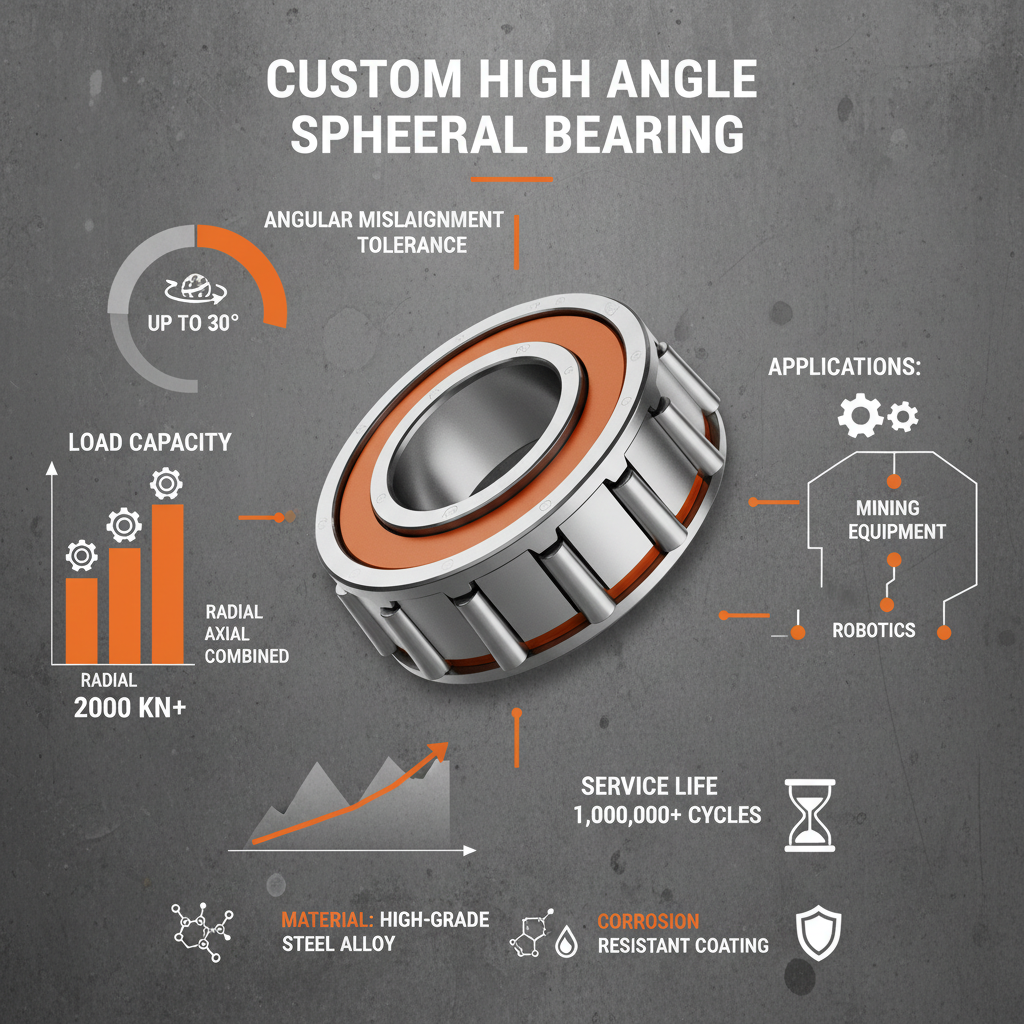
The demand for robust and reliable bearing solutions is intrinsically linked to global industrial growth. As manufacturing processes become more sophisticated and operating environments more demanding, the need for bearings capable of handling complex loads and misalignments increases. Custom high angle spherical bearing offer a unique solution, particularly in applications requiring high articulation, such as robotic arms, construction equipment, and aerospace components. The increasing adoption of automation and remote-controlled machinery across various sectors further drives the demand for these specialized bearings.
The global bearing market is a multi-billion-dollar industry, and the segment focusing on spherical bearings, including custom high angle configurations, is experiencing particularly strong growth. According to a report by the World Bearing Association, the Asia-Pacific region represents the largest market share, driven by rapid industrialization in countries like China and India. However, demand is also rising in North America and Europe, fueled by the modernization of infrastructure and the expansion of advanced manufacturing technologies. Ensuring quality and customization is vital to meeting the needs of a diverse and evolving customer base.
Custom high angle spherical bearing excel in applications where misalignment is unavoidable or dynamic. They offer significantly increased load capacity and lifespan compared to standard bearings in these conditions. The ability to accommodate angular offset reduces stress on the bearing components, minimizing wear and tear, ultimately leading to lower maintenance costs and improved equipment reliability. Furthermore, customization ensures the bearing is optimized for the specific application's unique requirements.
The customization process begins with a thorough understanding of the application's requirements, including load, speed, operating temperature, environmental conditions, and anticipated misalignment angles. Our engineers then collaborate with the client to design a bearing that meets those specific needs, considering material selection, internal geometry, sealing arrangements, and lubrication systems. Prototypes may be created for testing and validation before full-scale production begins.
Common materials include high-chromium steel (for general purpose applications), stainless steel (for corrosion resistance), and specialized alloys like those containing nickel or cobalt (for extreme temperatures or harsh environments). The choice of material depends heavily on the operating conditions and the required performance characteristics. Ceramic materials are also being explored for certain applications requiring exceptional wear resistance and high-speed capability.
Lead times vary depending on the complexity of the design and the availability of materials. Generally, lead times range from 8 to 16 weeks. More complex designs or those requiring specialized materials may have longer lead times. We strive to provide accurate lead time estimates during the initial consultation phase and maintain open communication throughout the production process to ensure timely delivery.
Determining the appropriate load capacity requires careful consideration of both static and dynamic loads, as well as any potential shock or vibration loads. It’s crucial to factor in safety margins to account for unforeseen circumstances. Our engineering team can assist you in performing load calculations and selecting a bearing with sufficient capacity for your application. Providing detailed operating conditions is vital for accurate assessment.
Maintenance requirements depend on the application and operating conditions. Regular lubrication is essential for minimizing friction and wear. Periodic inspections should be conducted to check for signs of damage or wear. Proper sealing helps protect the bearing from contaminants, reducing the need for frequent maintenance. Following our recommended maintenance guidelines will maximize bearing lifespan and performance.
Custom high angle spherical bearing represent a critical advancement in bearing technology, offering unparalleled performance and reliability in demanding applications. Their ability to accommodate significant misalignment, coupled with the benefits of customization, makes them an indispensable component in industries ranging from aerospace and robotics to renewable energy and heavy machinery. Understanding the core principles, key factors, and future trends associated with these bearings is essential for engineers and designers seeking to optimize equipment performance and minimize downtime.
Looking ahead, continued innovation in materials, manufacturing processes, and data analytics will further enhance the capabilities of custom high angle spherical bearing. By embracing these advancements, we can unlock new possibilities for designing more robust, efficient, and sustainable solutions for a wide range of applications. For tailored bearing solutions and expert technical support, visit our website at www.btzbearing.com.

 Afrikaans
 Albanian
 Amharic
 Arabic
 Armenian
 Azerbaijani
 Basque
 Belarusian
 Bengali
 Bosnian
 Bulgarian
 Catalan
 Cebuano
 Corsican
 Croatian
 Czech
Czech
 Danish
 Dutch
Dutch
 Esperanto
 Estonian
 Finnish
 French
 Frisian
 Galician
 Georgian
 German
 Greek
Greek
 Gujarati
 Haitian Creole
 Hausa
Hausa
 Hawaiian
 Hebrew
 Hindi
Hindi
 Miao
Miao
 Hungarian
 Icelandic
 Igbo
Igbo
 Indonesian
 Irish
Irish
 Italian
 Japanese
 Javanese
 Kannada
 Kazakh
 Khmer
Khmer
 Rwandese
 Korean
 Kurdish
 Kyrgyz
 Lao
Lao
 Latin
Latin
 Latvian
 Lithuanian
 Luxembourgish
 Macedonian
 Malgashi
 Malay
Malay
 Malayalam
 Maltese
 Maori
Maori
 Marathi
 Mongolian
 Myanmar
 Nepali
 Norwegian
 Norwegian
 Occitan
 Pashto
 Persian
 Polish
 Portuguese
 Punjabi
 Romanian
 Russian
 Samoan
 Scottish Gaelic
 Serbian
 Sesotho
 Shona
Shona
 Sindhi
 Sinhala
 Slovak
 Slovenian
 Somali
 Spanish
 Sundanese
 Swahili
 Swedish
 Tagalog
 Tajik
Tajik
 Tamil
Tamil
 Tatar
Tatar
 Telugu
 Thai
Thai
 Turkish
 Turkmen
 Ukrainian
 Urdu
Urdu
 Uighur
 Uzbek
Uzbek
 Vietnamese
 Welsh
Welsh
 Bantu
Bantu
 Yiddish
 Yoruba
 Zulu
Zulu
 English