Custom spherical roller bearing material plays a crucial role in modern industry, enabling reliable operation of machinery across diverse sectors. These bearings are specifically engineered to accommodate heavy loads and misalignments, making them essential for applications where consistent performance is paramount. The ability to tailor the material composition to specific operational demands is a significant advantage, leading to increased efficiency and longevity of equipment.
Globally, demand for high-performance bearings, including those utilizing custom spherical roller bearing material, is steadily increasing due to industrial expansion and the need for more reliable infrastructure. According to market research, the bearing industry is projected to reach substantial growth in the coming years, with a significant portion attributed to specialized applications requiring customized material solutions. This growth underscores the importance of understanding and optimizing custom spherical roller bearing material for a wide range of industries.
Understanding the nuances of custom spherical roller bearing material isn't just for engineers; it's becoming vital for procurement managers, maintenance personnel, and anyone involved in capital equipment lifecycle management. By embracing advancements in material science and manufacturing techniques, businesses can unlock significant cost savings and improve overall operational efficiency, minimizing downtime and maximizing return on investment.
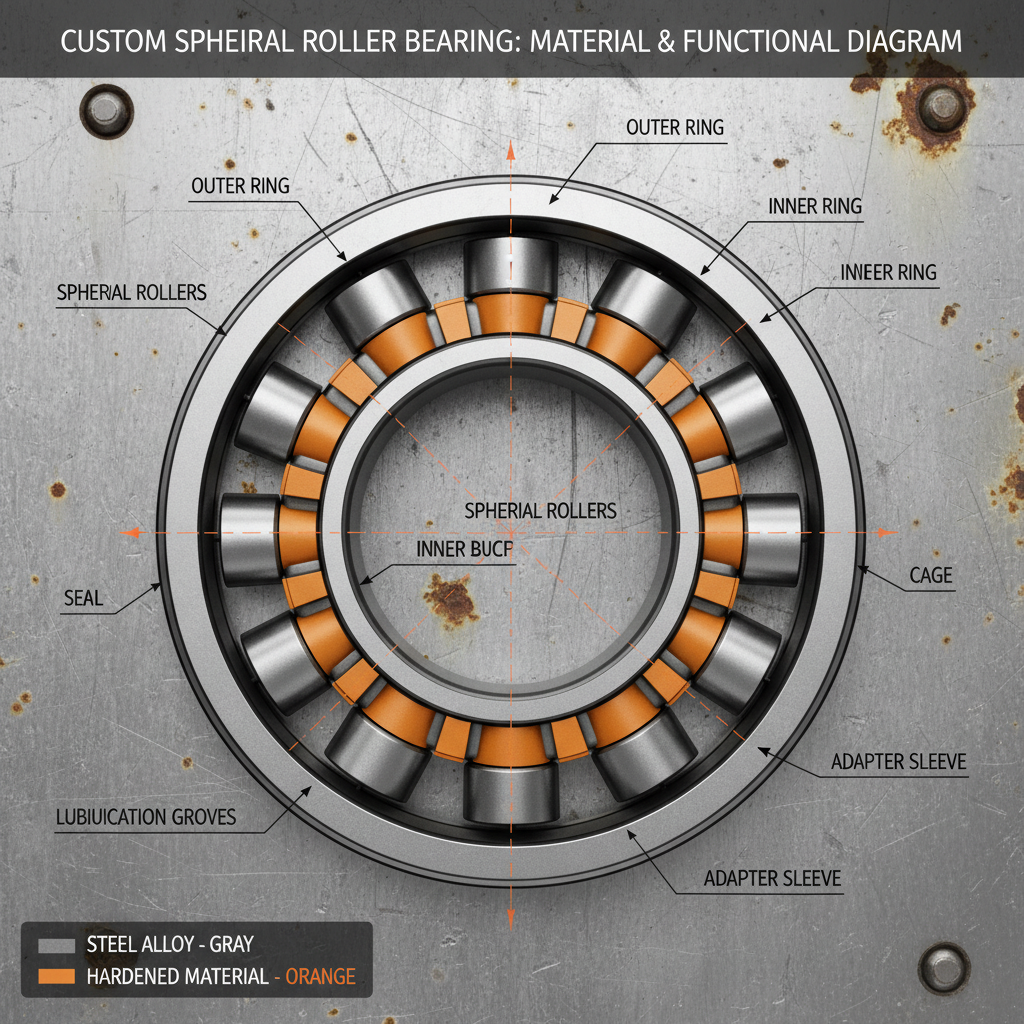
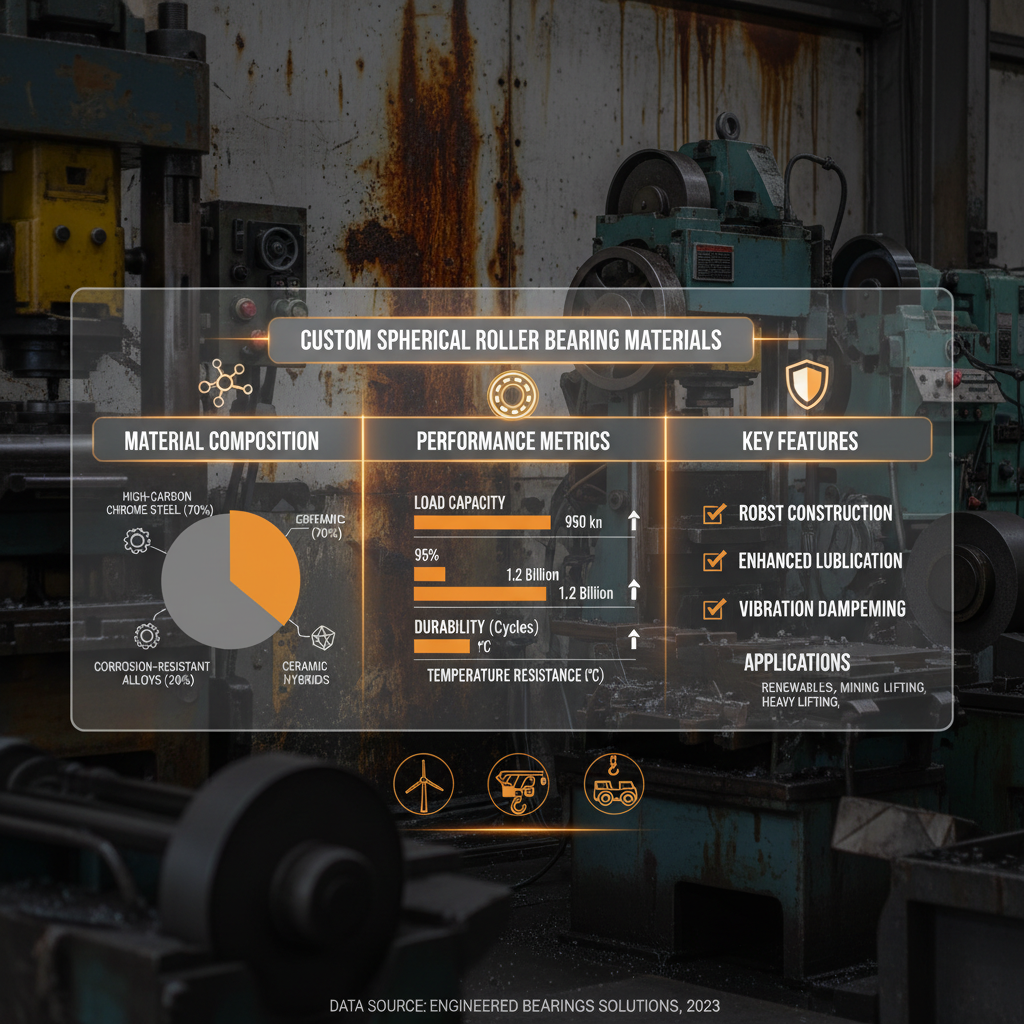
The use of custom spherical roller bearing material is no longer a niche application; it’s a strategic imperative for industries striving for peak performance and reliability. The ability to fine-tune material properties allows engineers to address specific challenges related to load capacity, operating temperature, corrosive environments, and speed requirements. custom spherical roller bearing material selection is a crucial step in designing long-lasting and efficient machinery.
This emphasis on customization directly impacts the bottom line by reducing maintenance costs, extending equipment lifespan, and minimizing unplanned downtime. By utilizing materials specifically tailored to their application, companies can avoid premature failure and optimize their operational expenses.
Custom spherical roller bearing material offers superior performance in demanding applications, providing enhanced load capacity, durability, and resistance to wear, corrosion, and extreme temperatures. This leads to reduced maintenance costs, extended equipment life, and minimized downtime compared to standard bearings, which may not be optimized for specific operational conditions.
Industries such as mining, steel manufacturing, aerospace, heavy machinery, and oil & gas benefit significantly. These sectors often require bearings to operate under extreme loads, high temperatures, or corrosive environments where standard bearings would fail prematurely. Custom materials ensure reliability and longevity in these critical applications.
Material selection is a collaborative process involving engineers and material scientists. It begins with a thorough understanding of the application’s requirements – load, speed, temperature, environment, and desired lifespan. Based on these factors, appropriate alloys, heat treatments, and surface coatings are chosen to optimize bearing performance.
Lead times vary depending on the complexity of the customization and the availability of materials. Typically, it ranges from 8 to 16 weeks. However, expedited delivery can sometimes be arranged for urgent applications. Close communication with the bearing manufacturer is essential for accurate lead time estimation.
While the initial cost of custom bearings is generally higher, the long-term value proposition often outweighs the price difference. Reduced maintenance, extended lifespan, and minimized downtime contribute to significant cost savings over the bearing’s operational life. It’s a strategic investment in reliability and efficiency.
Common surface treatments include chrome plating for corrosion resistance, nitriding for increased hardness and wear resistance, and specialized coatings for low-friction applications. The choice of surface treatment depends on the specific operating environment and performance requirements. These treatments enhance the bearing’s durability and longevity.
Custom spherical roller bearing material represents a critical advancement in engineering, enabling industries to overcome challenges related to load capacity, durability, and operational efficiency. By tailoring material properties to specific applications, businesses can achieve significant cost savings, improve safety, and enhance overall performance. Embracing these customized solutions is no longer an option, but a necessity for maintaining a competitive edge in today’s demanding global market.
Looking ahead, continued innovation in material science, coupled with the integration of smart sensors and data analytics, will further revolutionize bearing technology. Companies should prioritize collaboration with material experts and bearing manufacturers to stay at the forefront of these advancements and unlock the full potential of custom spherical roller bearing material. Visit our website at www.btzbearing.com to learn more about our custom bearing solutions.



 Afrikaans
 Albanian
 Amharic
 Arabic
 Armenian
 Azerbaijani
 Basque
 Belarusian
 Bengali
 Bosnian
 Bulgarian
 Catalan
 Cebuano
 Corsican
 Croatian
 Czech
Czech
 Danish
 Dutch
Dutch
 Esperanto
 Estonian
 Finnish
 French
 Frisian
 Galician
 Georgian
 German
 Greek
Greek
 Gujarati
 Haitian Creole
 Hausa
Hausa
 Hawaiian
 Hebrew
 Hindi
Hindi
 Miao
Miao
 Hungarian
 Icelandic
 Igbo
Igbo
 Indonesian
 Irish
Irish
 Italian
 Japanese
 Javanese
 Kannada
 Kazakh
 Khmer
Khmer
 Rwandese
 Korean
 Kurdish
 Kyrgyz
 Lao
Lao
 Latin
Latin
 Latvian
 Lithuanian
 Luxembourgish
 Macedonian
 Malgashi
 Malay
Malay
 Malayalam
 Maltese
 Maori
Maori
 Marathi
 Mongolian
 Myanmar
 Nepali
 Norwegian
 Norwegian
 Occitan
 Pashto
 Persian
 Polish
 Portuguese
 Punjabi
 Romanian
 Russian
 Samoan
 Scottish Gaelic
 Serbian
 Sesotho
 Shona
Shona
 Sindhi
 Sinhala
 Slovak
 Slovenian
 Somali
 Spanish
 Sundanese
 Swahili
 Swedish
 Tagalog
 Tajik
Tajik
 Tamil
Tamil
 Tatar
Tatar
 Telugu
 Thai
Thai
 Turkish
 Turkmen
 Ukrainian
 Urdu
Urdu
 Uighur
 Uzbek
Uzbek
 Vietnamese
 Welsh
Welsh
 Bantu
Bantu
 Yiddish
 Yoruba
 Zulu
Zulu
 English


