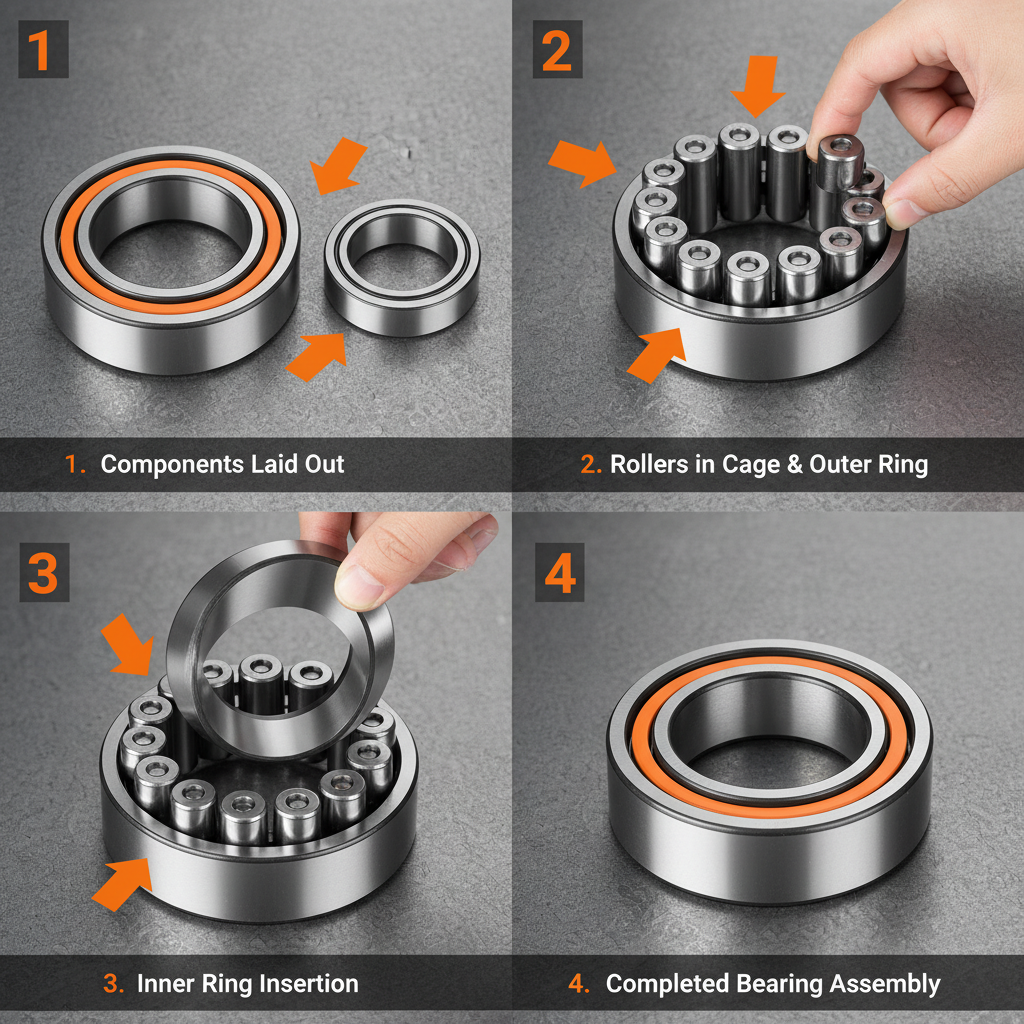
In the demanding landscape of modern industrial machinery, the quest for components that can withstand extreme mechanical stress and corrosive environments has led to the adoption of advanced ceramic solutions. Among these, the development of specialized bearing units utilizing high-performance materials is critical for maintaining operational uptime and reducing maintenance costs in heavy-duty applications.
The integration of high-strength materials allows for a significant leap in load-bearing capacity and thermal stability, addressing the inherent limitations of traditional steel components. By optimizing the geometry and material composition, engineers can now achieve a balance between extreme hardness and structural integrity, ensuring that machinery operates efficiently even under the most grueling conditions.
Understanding the technical nuances of custom silicon carbide bearings is essential for procurement managers and engineers who aim to optimize the lifespan of their equipment. These precision-engineered components provide an unparalleled solution for industries where traditional lubricants fail or where chemical erosion is a constant threat to productivity.
The Technical Architecture of Custom Silicon Carbide Bearings
The architectural integrity of these components is defined by precise dimensions and rigorous load ratings. For instance, a unit with a 25 mm bore diameter and a 95 mm flange width is engineered to provide maximum stability. With a total height of 35.8 mm and a basic dynamic load rating (Cr) of 14,000 N, the structural design ensures that radial forces are distributed evenly across the raceways.
Furthermore, the inclusion of four screwing holes with a 70 mm distance ensures a secure fit to the housing, while the M6 connection thread allows for precise lubrication. This level of customization ensures that the bearing unit can operate within a temperature range of -20 °C to 120 °C, making it suitable for varied industrial climates.
Global Industrial Demand and Material Evolution
Across the global manufacturing sector, there is a shifting paradigm toward materials that offer higher hardness and lower friction coefficients than traditional chrome steel. According to international engineering standards, the demand for high-performance ceramics has spiked as industries move toward "zero-maintenance" goals in remote or hazardous environments.
The primary challenge addressed by this evolution is the premature failure of bearings due to oxidation and thermal expansion. In sectors like chemical processing or mining, the traditional steel bearing often succumbs to corrosive agents, leading to costly unplanned downtime and potential safety hazards for the workforce.
By transitioning to advanced ceramic materials, industries can achieve a significant increase in the fatigue load limit. For a standard unit, a radial fatigue load limit of 335 N represents a benchmark for durability, ensuring that the component can sustain millions of cycles without catastrophic surface degradation.
Core Performance Factors for High-Load Applications
When evaluating the efficiency of custom silicon carbide bearings, the basic static load rating (C0r) is a critical metric. For the specified unit, a C0r of 7,800 N indicates the maximum load the bearing can withstand without permanent deformation of the rolling elements or raceways.
Durability is further enhanced by the precise flange thickness of 14 mm and a housing height of 27 mm. These specifications in custom silicon carbide bearings ensure that the unit maintains its alignment even when subjected to extreme radial vibrations, which is a common failure point in traditional machinery.
The thermal resilience of these units is equally impressive, operating effectively from -20 °C up to 120 °C. This flexibility allows custom silicon carbide bearings to be deployed in everything from cryogenic cooling systems to high-heat industrial ovens without losing dimensional stability.
Comparative Analysis of Bearing Load Ratings
Comparing the dynamic and static load capabilities is essential for determining the correct bearing for a specific application. The dynamic load rating (Cr) focuses on the life of the bearing under rotation, whereas the static load rating (C0r) defines the limit for stationary or slow-moving loads.
In high-precision environments, the ratio between these two values determines the "safety factor" of the machinery. A higher dynamic rating allows for faster operational speeds and higher throughput, while a robust static rating ensures the machine can be started and stopped under full load without damage.
Performance Comparison of Custom Silicon Carbide Bearings Variants
Strategic Integration in Heavy Machinery
Integrating these precision units into existing machinery requires a deep understanding of the housing interface. With a flange width of 95 mm and a specific distance to the fixing bore of 70 mm, these units are designed for seamless replacement of worn-out steel bearings, reducing the need for extensive machine redesigns.
In practical application, the use of an M6 connection thread for lubrication allows for the implementation of automated lubrication systems. This is particularly valuable in large-scale agriculture machinery or cement mixer bearings, where manual lubrication is often impractical and neglected, leading to premature failure.
Sustainability and Long-Term Operational Value
The long-term value of investing in advanced ceramic solutions lies in the dramatic reduction of the total cost of ownership (TCO). While the initial procurement cost may be higher than standard steel, the extended service life—driven by a fatigue load limit of 335 N—means fewer replacements and less labor expenditure over the machine's lifecycle.
From a sustainability perspective, the increased efficiency and reduced friction lead to lower energy consumption. When thousands of these units are deployed across a factory floor, the cumulative energy savings contribute significantly to the organization's green energy goals and carbon footprint reduction.
Furthermore, the reliability of these components enhances workplace safety. By eliminating the risk of sudden bearing seizure in critical equipment, companies can ensure a safer environment for their operators, fostering a culture of trust and technological innovation.
Future Innovation Trends in Ceramic Bearing Tech
The future of bearing technology is moving toward "intelligent" components that can monitor their own wear and tear. We expect to see the integration of embedded sensors within the 27 mm housing height to provide real-time data on temperature and vibration, allowing for predictive maintenance rather than reactive repairs.
Additionally, advancements in sintering processes are likely to further increase the basic dynamic load rating beyond the current 14,000 N. By refining the grain structure of the silicon carbide, manufacturers can produce units that are even lighter (currently approx 0.876 kg) yet substantially stronger.
As automation and digital transformation accelerate, the synergy between custom-engineered materials and AI-driven design will allow for the creation of bearings tailored to the exact load profile of a specific machine, maximizing efficiency to an unprecedented degree.
Technical Analysis of Custom Silicon Carbide Bearing Specifications
| Parameter Category |
Technical Value |
Industrial Impact |
Reliability Score (1-10) |
| Dynamic Load (Cr) |
14,000 N |
High-speed stability |
9 |
| Static Load (C0r) |
7,800 N |
Deformation resistance |
8 |
| Temp Range |
-20 to 120 °C |
Environmental versatility |
10 |
| Bore Diameter |
25 mm |
Standard shaft fitting |
9 |
| Weight |
≈0.876 kg |
Reduced inertia |
8 |
| Fatigue Limit |
335 N |
Extended service life |
7 |
FAQS
Custom silicon carbide bearings offer superior hardness, extreme corrosion resistance, and a significantly lower coefficient of friction. Unlike steel, they do not rust and can operate in chemically aggressive environments. Additionally, they maintain dimensional stability at higher temperatures (up to 120 °C in this specific model), which prevents the bearing from seizing during intense operational heat.
To determine sufficiency, you must calculate the equivalent radial and axial loads your machinery generates during its peak cycle. If the calculated dynamic load is well below 14,000 N, the bearing will offer a long service life. It is also important to consider the fatigue load limit of 335 N to ensure the unit can withstand millions of cycles without surface failure.
Yes, provided the housing matches the technical specifications: a 25 mm bore, 95 mm flange width, and 70 mm distance between fixing bores. The four screwing holes and M6 lubrication thread are designed for standard industrial mounting. We recommend verifying the flange thickness of 14 mm to ensure a flush and secure fit against your machinery's chassis.
While these units are designed for low maintenance, regular lubrication via the M6 connection thread is still recommended to reduce friction and clear debris. Because silicon carbide is extremely hard, the primary maintenance focus is on the lubrication quality and ensuring the fixing bolts remain torqued to prevent misalignment, which could otherwise cause edge loading on the raceways.
The range of -20 °C to 120 °C ensures that the bearing does not undergo significant thermal expansion or contraction. In extreme cold, the material remains structurally sound without becoming brittle. In high heat, the bearing avoids the "thermal runaway" common in steel bearings, where heat increases friction, which in turn increases heat, eventually leading to failure.
Absolutely. Silicon carbide is chemically inert and highly resistant to the aggressive cleaning agents (like caustic soda or acids) used in food and pharma plants. Its ability to operate without heavy oils in some configurations also reduces the risk of product contamination, making it a preferred choice for sterile environment machinery.
Conclusion
The transition to custom silicon carbide bearings represents a strategic investment in industrial reliability. By combining a high dynamic load rating of 14,000 N with exceptional thermal resilience and corrosion resistance, these components effectively eliminate the most common causes of mechanical failure. From the precision of the 25 mm bore to the robustness of the 7,800 N static load capacity, every specification is engineered to ensure maximum uptime and operational efficiency.
As global industry moves toward greater automation and sustainability, the role of advanced ceramic materials will only grow. Companies that adopt these high-performance solutions today will benefit from reduced maintenance costs, lower energy consumption, and enhanced equipment longevity. To ensure your machinery is equipped for the challenges of tomorrow, we invite you to explore our full range of precision bearing solutions. Visit our website: www.btzbearing.com