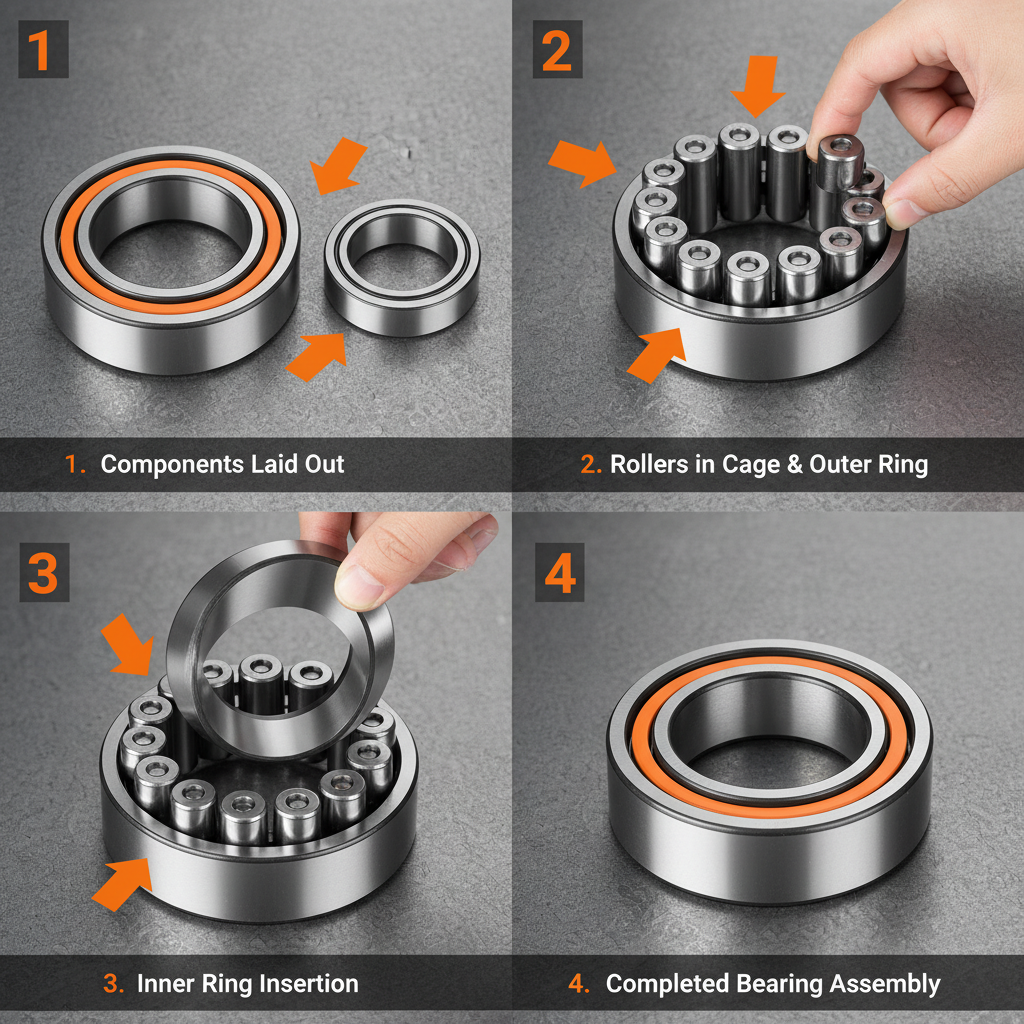
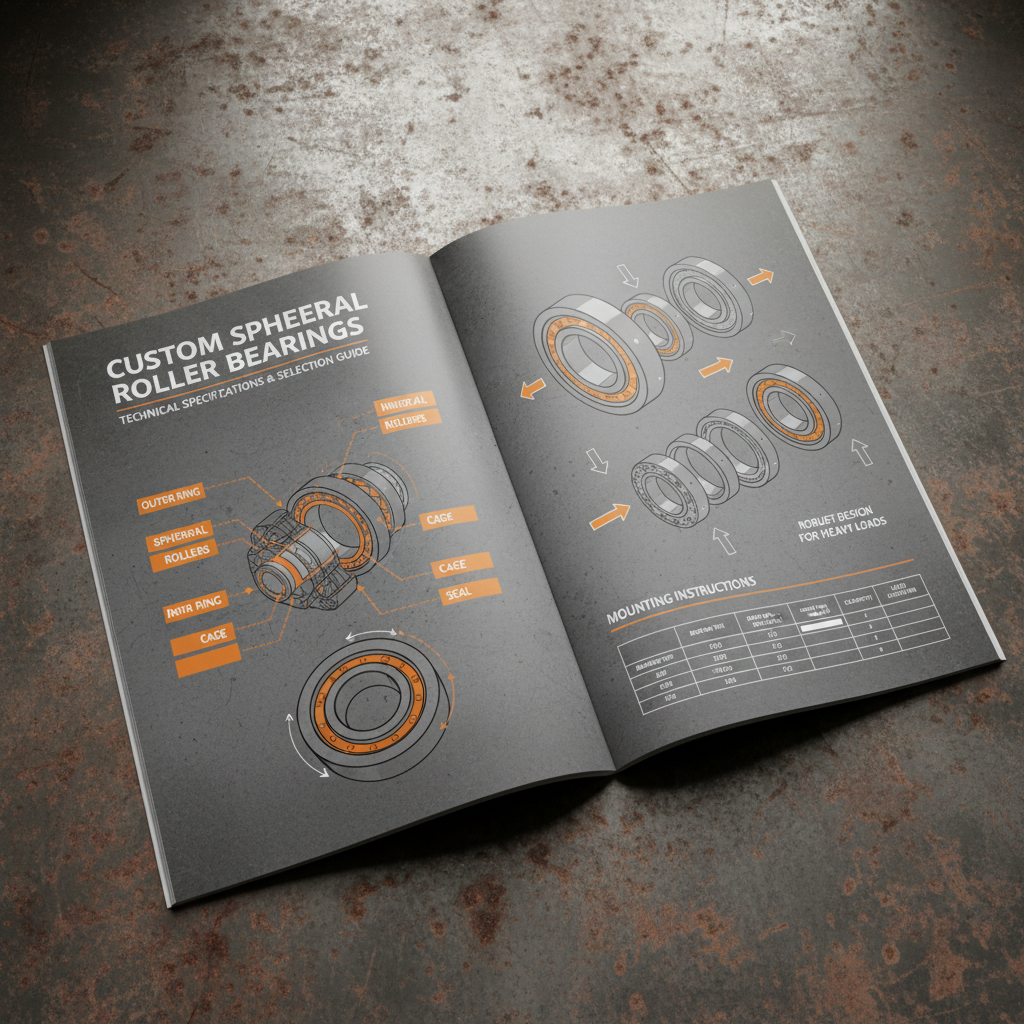
In the precision-driven world of vacuum technology, the stability of the motor is the heartbeat of the entire system. Custom vacuum motor bearings are engineered to withstand the unique stressors of low-pressure environments, where standard lubrication fails and thermal dissipation becomes a critical challenge. Ensuring that these components are matched perfectly to the motor's operational profile is essential for preventing premature failure and maintaining system integrity.
Across global industries—from semiconductor fabrication to pharmaceutical freeze-drying—the demand for high-performance rotational components has surged. The integration of specialized materials and precise tolerances allows these bearings to operate with minimal friction, which is paramount when dealing with high-speed vacuum pumps. Without the correct specification, vacuum systems often suffer from increased vibration and energy loss, leading to costly downtime.
Understanding the technical nuances of custom vacuum motor bearings allows engineers to optimize the lifespan of their equipment. By focusing on specific load ratings and temperature tolerances, such as those found in high-end flanged bearing units, industries can achieve a seamless balance between mechanical durability and operational efficiency.
Technical Specifications of Vacuum Motor Bearing Units
Precision engineering for custom vacuum motor bearings requires strict adherence to load-bearing capacities. A high-performance unit typically features a bore diameter of 55 mm and a robust flange width of 175 mm, ensuring a secure fit within the motor housing. With a basic dynamic load rating (Cr) of 56,000 N and a static load rating (C0r) of 36,000 N, these components provide the structural rigidity needed to maintain shaft alignment under radial stress.
Beyond load capacity, thermal management is critical. These units are designed to operate in temperatures ranging from -20 °C to 120 °C, making them suitable for varied industrial environments. The inclusion of an eccentric locking collar with an outside diameter of 80 mm and a fatigue load limit of 1,870 N ensures that the bearing remains stable during continuous high-speed rotation, effectively mitigating the risk of mechanical drift.
Global Industrial Relevance and Demand
The global landscape of vacuum technology is expanding rapidly, driven by the growth of the semiconductor and aerospace sectors. According to ISO standards for rotational machinery, the precision of the bearing interface directly correlates to the vacuum depth achievable in a system. As industries move toward "ultra-high vacuum" (UHV) requirements, the need for specialized custom vacuum motor bearings has become a critical bottleneck for innovation.
In many emerging markets, the challenge lies in the lack of standardized components that can handle both high radial loads and vacuum outgassing requirements. Standard bearings often utilize grease that evaporates in a vacuum, leading to sudden seizure and system failure. This creates a significant industrial risk, where a single bearing failure can result in the loss of expensive wafers in a cleanroom or the compromise of a pharmaceutical batch.
To address these challenges, manufacturers are shifting toward customized solutions that integrate specific flange heights (such as 48 mm) and precise fixing bore distances (143 mm). This transition ensures that the bearing unit is not just a generic part, but a tailored component that optimizes the motor's power-to-weight ratio while maximizing the operational lifespan in restrictive atmospheric conditions.
Defining Custom Vacuum Motor Bearing Engineering
At its core, the engineering of custom vacuum motor bearings is the science of minimizing friction and outgassing. Unlike standard bearings, these are designed with specific materials and geometries—such as a 20 mm flange thickness and a 29 mm height—to ensure they can be mounted securely without introducing contaminants into the vacuum chamber.
The "custom" aspect refers to the ability to modify parameters like the fixing bore (19 mm) or the number of screwing holes (4) to fit the specific architecture of a vacuum motor. This level of precision ensures that the custom vacuum motor bearings provide a perfect concentric fit, reducing vibration that could otherwise disrupt the vacuum seal.
From a humanitarian and industrial perspective, this precision translates to safer operations. In medical vacuum pumps used for surgical suction or laboratory research, the reliability of these bearings prevents equipment failure during critical procedures, highlighting how a technical component serves a broader social need for reliability and safety.
Core Performance Factors for Stability
Achieving long-term stability in vacuum motors requires a focus on several key mechanical factors. Firstly, the radial load capacity (Cr 56,000 N) must be sufficient to handle the centrifugal forces of the motor rotor. Secondly, the dimensional accuracy of the raceway width (40 mm) and the locking collar total width (62 mm) ensures that there is no axial play, which is the primary cause of noise and heat generation in vacuum environments.
Furthermore, the material's fatigue limit (1,870 N) dictates the maintenance interval. By optimizing the contact geometry and utilizing high-grade steel, custom custom vacuum motor bearings reduce the rate of wear, allowing motors to run for thousands of hours without requiring a rebuild, thus lowering the total cost of ownership for the end-user.
Performance Metrics for Vacuum Motor Bearing Solutions
Real-World Applications in Vacuum Systems
In practical industrial settings, custom vacuum motor bearings are widely deployed in high-vacuum diffusion pumps and turbomolecular pumps. In these applications, the bearing must support the rotor while resisting the intense heat generated by high rotational speeds. The specific use of a 55 mm bore ensures compatibility with standard industrial motor shafts, while the flanged housing allows for rapid replacement in assembly lines.
Beyond the factory floor, these components are vital in remote research stations and space-simulation chambers. For instance, in cryogenic vacuum systems used for astrophysics research, the ability of the bearing to operate at -20 °C without lubricant crystallization is a non-negotiable requirement. The precision of the 19 mm fixing bore ensures that the assembly remains airtight, preventing any leakage that could compromise the vacuum levels.
Long-term Value and Reliability Gains
Investing in custom vacuum motor bearings provides a tangible return on investment through reduced maintenance frequency. By utilizing a basic static load rating of 36,000 N, these bearings prevent the deformation of the raceway under static loads during motor idling, which significantly extends the operational life of the equipment.
From a sustainability perspective, high-efficiency bearings reduce the energy consumption of the vacuum motor. Lower friction means less electrical power is required to maintain the target RPM, contributing to a smaller carbon footprint for the plant. This alignment with "Green Manufacturing" goals makes customized bearing solutions a strategic asset for modern companies.
Moreover, the psychological peace of mind provided by high-reliability components cannot be overstated. When a system is designed with precise tolerances—like the 48 mm housing height—operators can trust that the equipment will not fail during a critical production cycle, fostering a culture of trust and innovation within the engineering team.
Future Innovations in Vacuum Bearing Materials
The future of custom vacuum motor bearings is trending toward the use of advanced ceramics and hybrid materials. While current steel solutions are robust, ceramic balls can further reduce friction and eliminate the need for traditional lubricants entirely, which is the "holy grail" of vacuum engineering. This shift will allow for even higher operating temperatures, potentially exceeding the current 120 °C limit.
Digital transformation is also playing a role, with the integration of "smart bearings" that contain embedded sensors. These sensors can monitor the vibration and temperature of the bearing in real-time, alerting operators to wear before a failure occurs. This transition from reactive to predictive maintenance will further maximize the uptime of vacuum-dependent industries.
As automation increases, the demand for bearings that can be installed robotically will grow. This will likely lead to more standardized "custom" dimensions, where the fixing bore and flange widths are optimized for automated assembly arms, further driving down the cost of high-precision vacuum systems.
Technical Parameter Analysis of Vacuum Motor Bearing Units
| Dimension Attribute |
Technical Value |
Impact on Performance |
Reliability Score (1-10) |
| Bore Diameter (d) |
55 mm |
Standard shaft compatibility |
10 |
| Dynamic Load (Cr) |
56,000 N |
High speed radial stability |
9 |
| Static Load (C0r) |
36,000 N |
Resistance to deformation |
8 |
| Temp Range |
-20 to 120 °C |
Extreme environment versatility |
9 |
| Fatigue Limit (Cur) |
1,870 N |
Extended service life |
7 |
| Flange Width (L) |
175 mm |
Enhanced mounting surface |
10 |
FAQS
Custom vacuum motor bearings are specifically engineered to handle "outgassing," where lubricants evaporate in low-pressure environments. They utilize specialized materials and precise tolerances—such as the specific 55 mm bore and 175 mm flange width—to ensure they don't seize or contaminate the vacuum chamber, unlike standard bearings which may fail due to lubrication loss.
You must analyze both the dynamic (Cr) and static (C0r) loads. For high-speed motors, a dynamic load rating around 56,000 N is recommended to handle centrifugal forces. For equipment that experiences heavy stationary loads, the static rating (e.g., 36,000 N) is the priority to prevent permanent deformation of the bearing raceway.
Yes, high-quality custom vacuum motor bearings are designed for a wide operating window, typically from -20 °C to 120 °C. This ensures they remain functional in both cryogenic cooling environments and high-heat industrial vacuum pumps without losing structural integrity or dimensional accuracy.
Precise dimensions, like a 175 mm flange width and 143 mm fixing bore distance, are critical for ensuring a perfectly concentric fit. Any misalignment can lead to increased vibration, which not only wears the bearing faster but can also cause the vacuum seal to leak, compromising the entire system's efficiency.
Lifespan depends on the fatigue load limit (Cur). With a limit of 1,870 N and proper installation, these bearings are designed for thousands of hours of continuous operation. Regular monitoring of vibration and temperature is recommended to maximize this lifespan and schedule predictive maintenance.
While the initial cost may be higher, they are far more cost-effective in the long run. By reducing unplanned downtime, preventing catastrophic motor failure, and lowering energy consumption through reduced friction, custom solutions significantly lower the total cost of ownership over the equipment's life.
Conclusion
The integration of custom vacuum motor bearings is a cornerstone of modern high-precision engineering. By combining rigorous technical specifications—such as a 56,000 N dynamic load rating and wide temperature tolerances—with customized dimensions for a perfect fit, industries can ensure the stability and efficiency of their vacuum systems. The move toward tailored solutions represents a shift from generic components to strategic engineering, where every millimeter of the flange and every Newton of load capacity is optimized for performance.
Looking forward, the adoption of hybrid ceramic materials and smart sensing technology will further revolutionize how we maintain vacuum motors. For companies seeking to enhance their operational reliability and reduce long-term costs, prioritizing customized bearing solutions is no longer optional but essential. We invite you to explore our full range of precision components to optimize your machinery. Visit our website: www.btzbearing.com